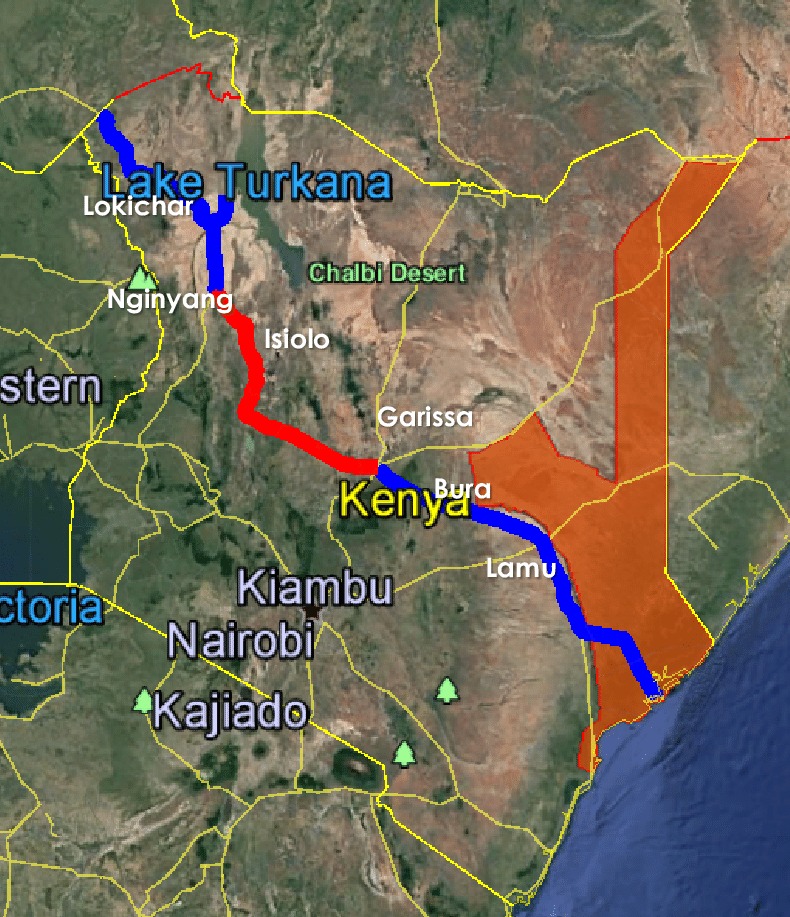
The Lamu Port-South Sudan-Ethiopia Transport (LAPSSET) Corridor is one of Kenya’s most ambitious infrastructure projects. Conceived as a multi modal network linking a new deep-sea port at Lamu to roads, rail, pipelines, and special economic zones, its progress has been slower than initially envisaged. This has raised a recurring question on whether is LAPSSET stalling, or is it unfolding in a way that reflects the economic realities of large, cross border projects.
From an economic standpoint, LAPSSET was never a single, short-term undertaking. It is a corridor project designed to be implemented in phases, with each component standing on its own economic logic. Some elements, such as completed berths at Lamu Port and sections of supporting road infrastructure, are already operational or in advanced stages. Others, particularly those requiring regional coordination and large capital outlays, naturally face longer gestation periods.


Delays in mega projects are often less about abandonment and more about sequencing. Infrastructure of this scale depends on demand certainty, financing structures, and complementary investments. For LAPSSET, utilization depends not only on Kenyan infrastructure but also on trade volumes, security conditions, and economic growth in neighboring countries. These factors evolve over time and influence the pace at which different components become commercially viable.
Financing is another constraint that shapes timelines. Large corridor projects require a mix of public funding, concessional finance, and private investment. In periods of fiscal pressure, governments tend to prioritize projects with immediate economic returns, slowing expenditure on longer horizon initiatives. This does not eliminate the project’s value; it reflects prudent capital allocation under budget constraints.
Importantly, LAPSSET’s economic rationale extends beyond transit revenue. The corridor is intended to open up northern Kenya, catalyze urban development, and support industrial activity around logistics, energy, and trade services. These spillover effects materialize gradually and depend on policy consistency, land use planning, and private sector participation rather than construction speed alone.
The question of whether LAPSSET will be completed is therefore less binary than it appears. Completion is not a single event but a process of incremental expansion and utilization. Progress is likely to remain uneven, with some components advancing faster than others based on demand and financing readiness.
Looking ahead, the project’s future rests on realism rather than urgency. Aligning development with actual trade flows, strengthening regional coordination, and focusing on economically viable segments can sustain momentum without overstretching public finances. LAPSSET’s success will ultimately be measured not by how fast it is built, but by whether it becomes a functional corridor that supports trade, investment, and regional integration over time.
Start your investment journey today with the Cytonn Money Market Fund. Call + 254 (0)709101200 or email sales@cytonn.com