Just days after warnings of possible Christmas blackouts unsettled the country, Kenya’s power saga has taken another dramatic turn. The High Court has intervened to halt the payment of Sh10 billion to a collapsed Spanish firm, amid allegations that Kenyans may be funding electricity infrastructure that was never constructed.
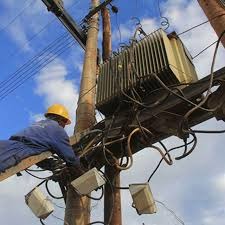
At the centre of the storm is the Kenya Electricity Transmission Company (Ketraco), the custodian of the country’s high-voltage transmission lines and currently one of its most financially paralyzed public agencies. In a conservatory order issued on Monday, the court barred Ketraco, the Energy Ministry, the National Treasury, and the Attorney General from authorizing or processing any payment to Inabensa Enerji AŞ or any related entity, pending the resolution of constitutional questions surrounding the deal.
The ruling effectively freezes what critics describe as a looming transfer of billions of shillings to a foreign company that collapsed years ago.
A Payment Stopped—But a Crisis Still Burning
The decision adds another layer to a decade-long dispute that has already frozen 17 Ketraco bank accounts, choking the utility’s ability to fund repairs, maintain transmission lines, and stabilize the national grid. While the court has now blocked the outgoing Sh10 billion payment, the earlier freeze on Ketraco’s accounts remains, leaving the power transmitter stuck between protecting public funds and keeping the lights on.


The judge ruled that halting the payment was necessary to safeguard taxpayers’ money while serious constitutional and governance issues are examined. State agencies were also ordered to compile and preserve all records linked to the disputed contract approvals, correspondence, and payment instruments, with warnings of penalties for non-compliance.
A Project That Lived on Paper
The case was brought by Lalashe Consulting, a public interest organization that alleges Kenyans are being asked to pay billions for projects that never materialized. At the heart of the dispute are two engineering, procurement, and construction contracts awarded in 2013 for the 400 kV Lessos–Tororo transmission line and the extension of the Lessos substation projects meant to support regional electricity trade.
Valued initially at about Sh4.5 billion, the contracts were terminated in 2016 for non-performance, including failure to mobilize and execute the works. According to the petition, not a single transmission tower was erected, and no power line was completed.
Yet years later, the financial exposure has ballooned to Sh10 billion.
Lalashe has compared the situation to the Anglo-Leasing scandal, warning of a troubling pattern where failed or fictitious projects morph into massive compensation claims. In its words, the dispute represents the “monetization of failure”—where non-delivery is rewarded at the expense of the public purse.
A Bankrupt Firm, a New Claimant, and Lingering Questions
Complicating matters further is the contractor’s own status. Court records show that Instalaciones Inabensa S.A. became insolvent shortly after the contracts were terminated. In 2023, its rights were transferred to another Spanish firm, C.A. Infraestructuras T & I SLU, which has since been pursuing payment.
Critics argue that once public funds are paid to a bankrupt foreign entity, recovery becomes practically impossible even if later court decisions go in Kenya’s favor. The court appeared to agree, noting that its duty extends beyond contract enforcement to the protection of public resources.
What This Means for Kenyans
This case isn’t just about lawyers, contracts, or arbitration awards. It touches on three things Kenyans feel every day: electricity, accountability, and trust.
On one hand, stopping the Sh10 billion payment shields public funds from potentially irreversible loss. On the other hand, the ongoing freezing of Ketraco’s accounts continues to weaken the very system that keeps the country powered, especially during a festive season when demand peaks and tolerance for outages is low.
As the court prepares to hear the petition on its merits, Kenya is left navigating a delicate balance: enforcing the rule of law without plunging the nation into darkness and demanding accountability without crippling essential infrastructure.
For now, the money is frozen, the grid is strained, and the questions remain not just about who should be paid, but about how such costly disputes are allowed to linger long enough to threaten both public funds and public life.