Kenya’s unit trust industry is experiencing an unprecedented boom, with the number of investors more than doubling to 3.0 mn in September 2025 from 1.3 mn in September 2024 which highlights the shift in how Kenyans are choosing to save, invest and manage financial risk. The surge reflects stronger investor awareness, broader digital access and rising demand for flexible investment options in a period of economic uncertainty.
Unit trusts, which pool investor funds to buy diversified assets such as bonds, equities and cash deposits, are gaining traction due to their ease of entry and exit, professional management and relatively low minimum contributions. Their appeal has grown sharply as returns on traditional instruments have softened, pushing investors to explore alternative vehicles that offer both stability and liquidity. The result has been a dramatic 114.8% jump in assets under management, rising to KES 697.6 bn in September 2025 from a record of KES 316.4 bn in September 2024.
Industry stakeholders attribute the momentum partly to aggressive marketing and sustained investor education campaigns. Digital platforms have played an equally crucial role, allowing fund managers to onboard clients instantly and giving retail investors convenient access to various products. This has widened participation beyond traditional urban, high-income clients and positioned unit trusts ahead of the equity market, which has roughly 1.3 mn retail investors despite operating for over six decades.
Money market funds remain the dominant product, collectively managing KES 400.0 bn, accounting for 58.9% of total industry assets. However, their share has been gradually eroded by the rise of fixed-income funds and special funds. These two segments have grown to 20.1% and 20.3% respectively in the year to date, eating into the value of investments put into money market funds. This reflects investors’ appetite for diversification and protection against market volatility. The shift also mirrors the trend seen in December 2024, when money market funds accounted for 63.9% of total industry assets before the rebalancing began.


Another emerging trend is the introduction of offshore and foreign-currency denominated unit trust products. These products allow investors to hedge against local currency depreciation and gain exposure to global markets, strengthening the industry’s ability to cater to a wider set of investor needs.
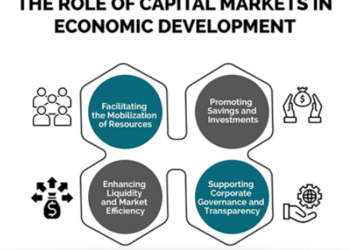
The rapid growth of unit trusts carries broader implications for Kenya’s financial sector. A deeper retail investor base boosts domestic savings, supports capital market development and helps reduce reliance on short-term bank deposits. Continued regulatory support, product innovation and transparent fund management will be essential in sustaining this momentum and ensuring investors fully understand the risks associated with various asset classes. For now, the sharp rise in both investor numbers and assets under management signals a major shift in Kenya’s investment culture which is becoming increasingly digital, diversified and driven by informed financial decision-making. (Start your investment journey today with the cytonn MMF, call+2540709101200 or email sales@cytonn.com)