
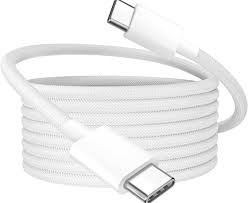
It’s a new story in Kenya as it’s quietly redrawing the rules of its mobile device market. New regulations by the Communications Authority of Kenya (CA) now require all phones sold in the country to support USB Type-C charging. On the surface, it looks like a technical adjustment. In reality, it signals a broader shift in how devices are built, sold, and used.
According to Dennis Musau, core to this move is standardization. The use of USB Type-C is no longer just a premium feature—it is becoming the baseline. Unlike older connectors, it is reversible, faster, and capable of handling higher power and data speeds. As a result, regulators see it as a practical way to align Kenya with global manufacturing trends while improving user experience.
However, the immediate impact will be felt in the low-end phone segment. Feature phones—commonly referred to as “kabambe”—still dominate parts of the market, especially among low-income users. Most of these devices rely on Micro-USB charging. By enforcing USB-C, the CA is effectively phasing out a large portion of these models.
This raises an important question: who absorbs the cost of transition?
For manufacturers and importers, the answer is straightforward—adapt or exit. Devices that fail to meet the new requirements risk being locked out of the Kenyan market. This includes not only feature phones but also older premium models. Notably, devices such as earlier versions of the iPhone 15 and older iPads that use Apple’s Lightning connector fall outside the new compliance framework.
For consumers, the implications are more layered. On the one hand, standardization reduces friction. A single charger across devices means lower long-term costs and greater convenience. On the other hand, the short-term effect could be higher device prices, particularly in entry-level segments where affordability is critical.
At the same time, the regulations extend beyond charging. The CA is also introducing minimum performance standards. Batteries must meet defined thresholds for talk time and standby duration. Devices must support accessibility features such as screen readers, text-to-speech, and real-time captioning. These additions suggest that the policy is not just about hardware compatibility but also about user inclusivity and product quality.
Importantly, Kenya is not acting in isolation. The move mirrors policy direction in markets like the European Union, which has already enforced a common charger rule across member states. Similar transitions are underway in parts of Asia and the Middle East. By aligning with these standards, Kenya positions itself within a global supply chain that is gradually eliminating legacy technology.
Even so, implementation remains uncertain. The CA has yet to clarify enforcement timelines or penalties for non-compliance. This creates a temporary grey area for businesses that must plan inventory, logistics, and pricing strategies without full regulatory certainty.
Meanwhile, local assembly players such as East Africa Device Assembly Kenya and firms like M-Kopa appear better positioned. Many of their newer models already support USB-C, giving them a potential advantage as the market adjusts.
Still, the broader question is whether the policy will accelerate digital inclusion or unintentionally widen gaps. If entry-level devices become more expensive, some users may delay upgrades or revert to secondary markets. Conversely, if manufacturers respond with affordable USB-C models, the transition could unlock better technology access across income segments.