Kenya braces for Sh45 Billion Economic Shock: Trump’s withdrawal from global bodies threatens Nairobi’s UN diplomatic hub
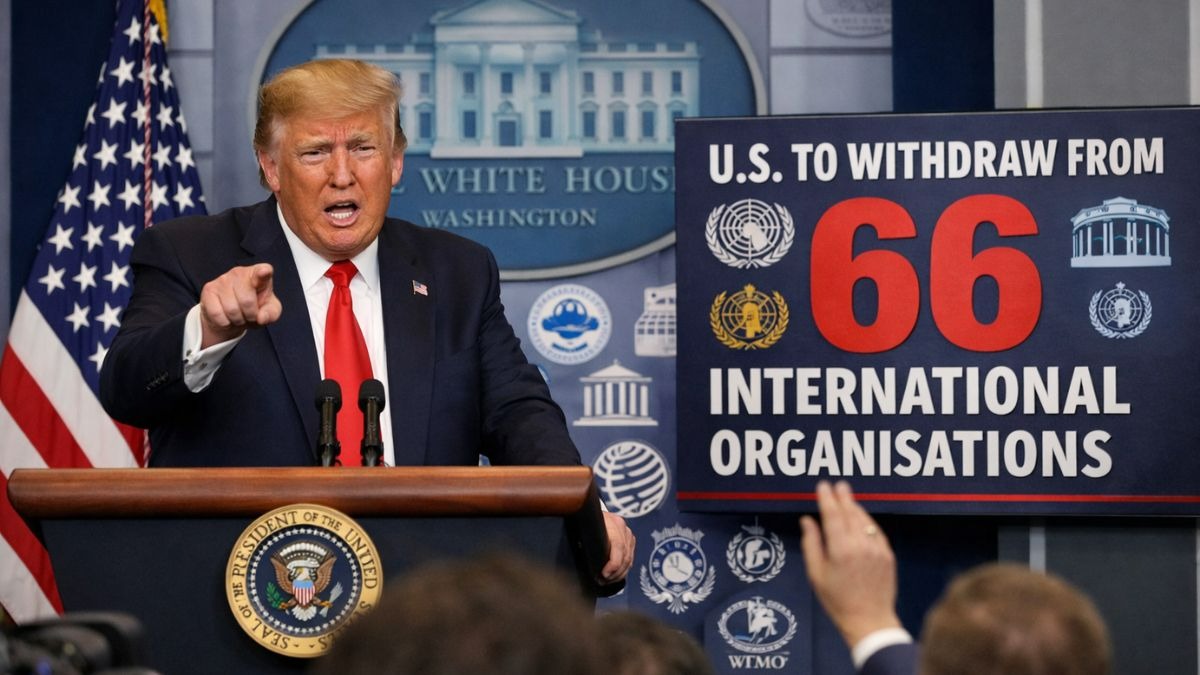
In a dramatic escalation of “America First” foreign policy, US President Donald Trump has signed an executive order withdrawing the United States from 66 international organizations, conventions, and treaties. Announced in early January 2026, the move targets entities deemed contrary to US interests, including key UN-affiliated bodies focused on climate change, development, health, and more — such as the UN Framework Convention on Climate Change (UNFCCC), the Intergovernmental Panel on Climate Change (IPCC), and others.
For Kenya, the fallout is immediate and severe. As home to major UN headquarters like the United Nations Environment Programme (UNEP) and UN-Habitat in Nairobi’s Gigiri complex, the country has long benefited from its position as Africa’s premier multilateral diplomatic hub. Experts now warn that this withdrawal could deliver a devastating Sh45 billion (~$250–350 million) annual hit to the economy, combining direct funding losses with ripple effects on jobs, real estate, hospitality, and the broader service sector.
The Scale of the Financial Impact
Direct US contributions to the UN and affiliated programmes operating in or benefiting Kenya are estimated at $250–350 million annually, equivalent to Sh32–45 billion at current exchange rates. This excludes indirect economic activity generated by the presence of international staff, conferences, and related businesses in Nairobi.
Key areas at risk include:
- Climate and environment programmes supported by UNEP, which anchors Nairobi’s reputation as the world’s environmental capital.
- Urban development and slum upgrading initiatives through UN-Habitat.
- Aid for education in refugee and drought-affected communities.
- Counter-terrorism training and justice sector support.
- Trade and export assistance for Kenyan products like coffee, tea, and horticulture.
The withdrawal not only cuts funding but also weakens global frameworks Kenya relies on for climate finance, biodiversity support, and international cooperation.
Nairobi’s Status as Diplomatic Hub Under Threat
Nairobi has positioned itself as a global player in multilateralism, hosting the UNEP (the only UN Environment Programme headquarters outside New York) and UN-Habitat, alongside other key agencies. The US has historically been a major donor to these entities.
With reduced US participation and funding, operations could downsize, leading to:
- Fewer international staff and elite jobs in the city.
- Declining demand for high-end real estate, hotels, and services.
- Erosion of Kenya’s soft power and influence in global forums.
Experts describe the impact as “minimal” in the short term but potentially “shocking” for an economy already facing multiple external pressures from US policy shifts in recent years.
Broader Global and Regional Implications
The US exit from bodies like the UNFCCC and IPCC has drawn sharp criticism from climate scientists and organizations, who argue it undermines collective efforts to address global warming. For Kenya, vulnerable to droughts, floods, and climate-related challenges, this could slow access to vital adaptation funds and technical support.
While some observers see opportunities for other powers (like China) to fill the vacuum through alternative initiatives, the immediate outlook for Kenya remains challenging. The government and private sector will need to adapt quickly to safeguard the diplomatic ecosystem that has boosted Nairobi’s global profile.
As Kenya navigates this latest Washington-induced shock, the withdrawal serves as a stark reminder of how interconnected and vulnerable national economies are to shifts in superpower priorities.
What do you think this means for Kenya’s future as a diplomatic and environmental hub? Share your thoughts in the comments below. Stay tuned for more updates on this developing story. 🇰🇪🌍