Sharp Daily
No Result
View All Result
Thursday, January 22, 2026
  • Home
  • News
    • Politics
  • Business
    • Banking
  • Investments
  • Technology
  • Startups
  • Real Estate
  • Features
  • Appointments
  • About Us
    • Meet The Team
Sharp Daily
  • Home
  • News
    • Politics
  • Business
    • Banking
  • Investments
  • Technology
  • Startups
  • Real Estate
  • Features
  • Appointments
  • About Us
    • Meet The Team
No Result
View All Result
Sharp Daily
No Result
View All Result
Home Banking

Kenya’s Microfinance Banks report record KES 2.4 billion pre-tax loss in 2023

Derrick Omwakwe by Derrick Omwakwe
July 19, 2024
in Banking
Reading Time: 3 mins read

Kenya’s Microfinance Banks (MFBs) reported a combined pre-tax loss of KES 2.4 billion as of December 31, 2023, deepening from the KES 980 million loss recorded at the same time in 2022.

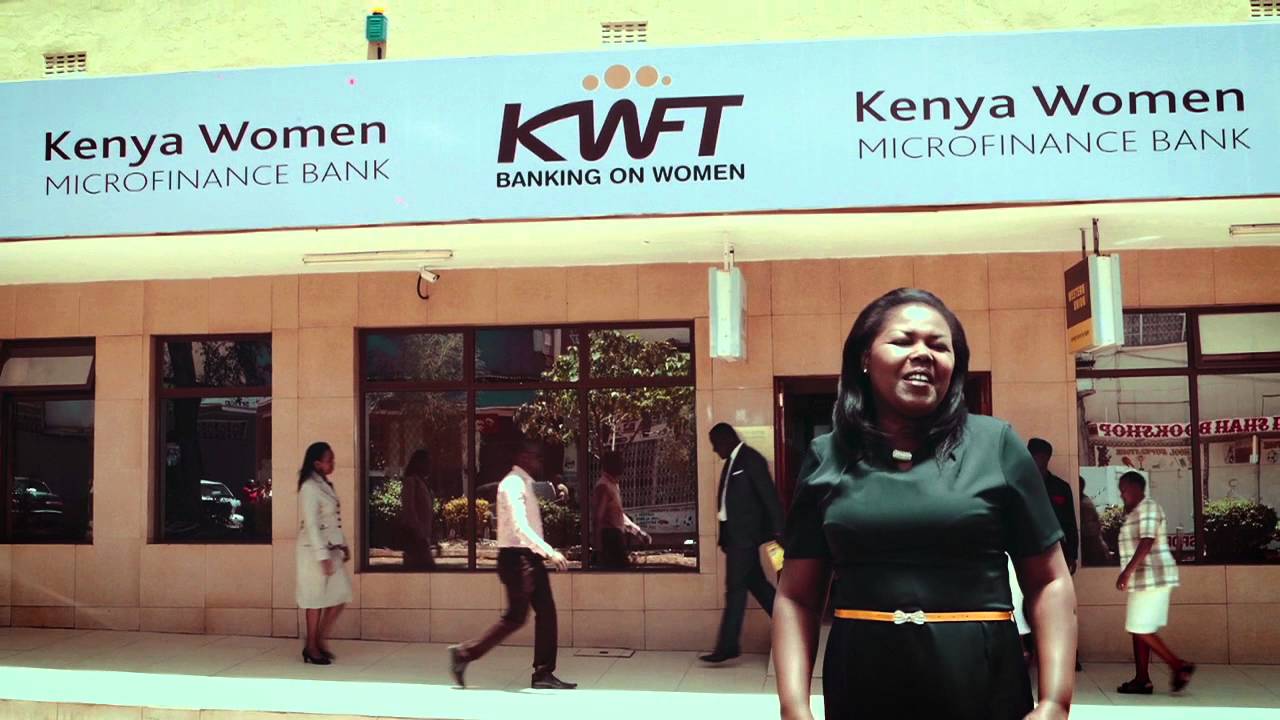
According to the Central Bank of Kenya, seven institutions reported profits while the remaining seven posted losses. The major contributors to the sector’s losses were Kenya Women Microfinance Bank Limited, Faulu Microfinance Bank Limited, and Rafiki Microfinance Bank Limited, with pre-tax losses of KES 938 million, KES 719 million, and KES 434 million, respectively.

The sector’s performance decline was driven by a 6.0% increase in expenses, rising to KES 13.9 billion in 2023 from KES 13.1 billion in 2022, and a 3.0% decrease in revenue, to KES 12.8 billion in 2023 from KES 13.2 billion in 2022. Key expense drivers included impairment losses on loans and increased staff costs, which surged by 957.0% and 18.0% respectively, to KES 1.2 billion and KES 4.3 billion in 2023 from KSh114 million and KSh3.7 billion in 2022, due to loan write-offs and higher staffing expenses.

Fees and commissions from the loan portfolio and non-operating income saw the most significant declines, dropping to KSh919.3 million and KSh19.8 million from KSh1.1 billion and KSh509.2 million respectively, in 2022. This reduction was attributed to increased competition from commercial banks and digital lenders, leading to a 4.7% decrease in loan advances, as well as reduced rental income following the disposal of property by one MFB.


RELATEDPOSTS

How financial institutions can break away from vendor monopolies

November 14, 2025

KESONIA: Transforming Kenya’s benchmark interest rate framework

October 13, 2025

The sector’s return on equity decreased by 24.0%, resulting in a negative 35.0%, while the return on assets dropped by 3.0%, standing at negative 4.0%. The ratios of core and total capital to total risk-weighted assets declined by 3.0% and 4.0% to 10.0% and 12.0%, respectively, due to the KES 2.4 billion loss incurred in 2023. Although these capital ratios remained marginally within the minimum requirements of 10.0% and 12.0%, three institutions were non-compliant.

The sector’s liquidity stood at 63.0% as of December 31, 2023, with one institution failing to meet the statutory minimum liquidity ratio of 20.0%.

The branch network of the microfinance sector increased by two in 2023, bringing the total to 115 branches. LOLC MFB, Salaam MFB, and Caritas MFB each opened one branch, while Branch MFB closed one. The number of marketing offices decreased to 50 in 2023 from 57 in 2022, with the sector opening 10 and closing 3 offices.

Additionally, the agency network contracted to 677 in 2023 from 921 in 2022, as the sector engaged 35 new specific third-party agents and closed 263 agents.
Previous Post

Kenya’s retail sector sees 9.5% yield surge amid competitive strategies

Next Post

Twelve Kenyan banks violate CBK guidelines in 2023

Derrick Omwakwe

Derrick Omwakwe

Related Posts

Banking

Kenya still relies on cheques as digital payments rise despite Sh200 billion in monthly transactions

January 13, 2026
Banking

From Shadow to Structure: What CBK’s Licensing of Digital Lenders Means for Kenya’s Credit Market

January 9, 2026
Banking

Banks expect private sector credit to pick up by year end

December 22, 2025
Banking

Kenyan banks lower lending rates after central bank cut

December 15, 2025
Analysis

Why Kenya doesn’t need a second bond exchange: the case against market fragmentation.

December 3, 2025
Analysis

Climate Finance in Africa: How Green Bonds Are Transforming Sustainable Investment.

November 28, 2025

LATEST STORIES

How targeted training is reshaping Kenya’s workforce readiness

January 22, 2026

Nedbank targets NCBA in landmark $856 million acquisition

January 22, 2026

FSD Africa to launch Kenya SME Debt Fund to expand access to business financing

January 22, 2026

Worldcoin deletes all data collected from Kenyans in 2023 after High Court order

January 22, 2026

How Banking Has Quietly Become Part of Everyday Life in Kenya

January 21, 2026

Safaricom to roll out tokenised wi-fi with hourly and daily plans

January 21, 2026
The up arrow shows the inflation rate. Interest rates increase, home loan, mortgage, house tax. investment and asset management concept. percentage for increasing interest rates with stacks coins

Understanding Private Equity (P.E) in Kenya

January 21, 2026

AI spending pressures weigh on Meta shares despite strong operating performance

January 21, 2026
  • About Us
  • Meet The Team
  • Careers
  • Privacy Policy
  • Terms and Conditions
Email us: editor@thesharpdaily.com

Sharp Daily © 2024

No Result
View All Result
  • Home
  • News
    • Politics
  • Business
    • Banking
  • Investments
  • Technology
  • Startups
  • Real Estate
  • Features
  • Appointments
  • About Us
    • Meet The Team

Sharp Daily © 2024