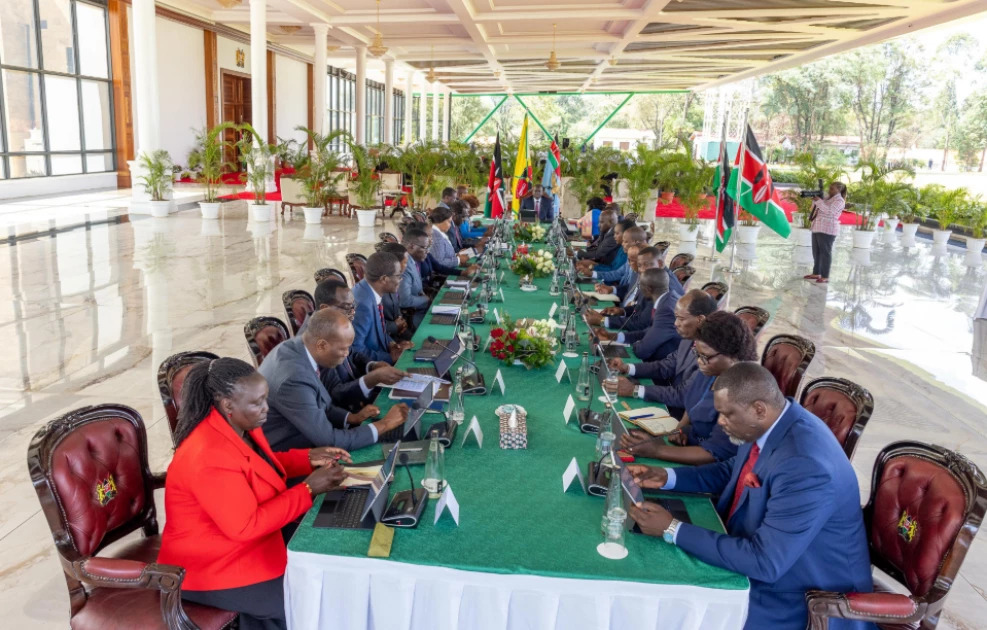
Kenya’s Cabinet has approved a Ksh4.7 trillion budget for the 2026/27 financial year, setting the stage for what the government describes as a growth-focused and service-oriented fiscal plan. The approval marks a key step in the country’s budget process, with the proposal now headed to Parliament for debate and eventual adoption before the start of the new financial year.The Ksh4.7 trillion budget Kenya has unveiled reflects an ambitious spending plan aimed at accelerating development while maintaining essential public services. Out of the total allocation, approximately Ksh3.46 trillion will go toward recurrent expenditure. This portion covers government salaries, operational costs, debt servicing, and the continued provision of core services such as healthcare, security, and education.
At the same time, the government has set aside Ksh749.5 billion for development expenditure. This funding is expected to support infrastructure projects, agricultural programmes, energy expansion, affordable housing initiatives, and other capital investments designed to stimulate economic activity. By increasing development spending, the administration hopes to strengthen job creation and enhance productivity across key sectors of the economy.County governments are also significant beneficiaries under the new budget framework. A total of Ksh495.7 billion will be transferred to counties to support devolved functions. Of this, Ksh420 billion represents the equitable share of national revenue, while the remainder will be distributed through additional allocations. These funds are expected to enhance service delivery at the local level, particularly in health services, early education, water projects, and local infrastructure.
Despite the strong focus on growth and service expansion, the budget highlights a sizeable gap between projected revenue and total expenditure. With estimated revenues at around Ksh3.53 trillion, the government will need to finance the shortfall through borrowing and other fiscal measures. This underscores the importance of maintaining debt sustainability and fiscal discipline as the country balances development ambitions with economic stability.Economic projections suggest steady growth of around 5 percent, supported by easing inflation and improved credit conditions. The government is banking on this positive outlook to sustain revenue collection and maintain investor confidence.As Parliament prepares to scrutinise the proposal, the Ksh4.7 trillion budget Kenya has approved signals a determined effort to expand public investment, empower counties, and sustain economic growth — while carefully managing the realities of fiscal pressure and debt obligations.