The debate around Kenya’s affordable housing program has intensified in recent years, especially as the government accelerates construction through public–private partnerships and the Affordable Housing Fund. Supporters frame the initiative as a timely intervention to address urban inequality, while critics question its economic feasibility, execution capacity, and long-term sustainability. The truth lies somewhere in between: government involvement in affordable housing can be transformative, but only if implemented with discipline, transparency, and realistic expectations.
Kenya faces a documented housing deficit of more than 2.0 mn units, with urban areas absorbing nearly 250000.0 new residents annually. The private sector alone has struggled to bridge this gap because most developers focus on middle- and high-income earners where returns are higher and risks lower. Government intervention therefore attempts to redirect investment towards low- and middle-income groups that the market consistently neglects. Through land provision, regulatory support, and tax incentives, the state is trying to make it commercially viable for developers to build houses that many working-class Kenyans can reasonably aspire to own.

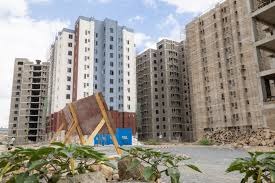
Another benefit of government participation is scale. Private developers rarely have the capacity to roll out thousands of units simultaneously, especially in counties outside Nairobi. The government, however, can coordinate large parcels of public land, mobilize financing, and streamline approvals, enabling projects like Park Road, Bondeni in Nakuru, and the proposed Shauri Moyo redevelopment. Such scale stimulates job creation, supports local manufacturing, and strengthens urban planning frameworks by integrating roads, schools, and utilities into housing projects.
Still, government-led housing is not without challenges. The financing model, especially the mandatory Affordable Housing Levy, has sparked heated public debate. Many workers argue that the levy reduces disposable income in a high-cost environment. Others worry that the fund may face governance risks if oversight is weak. Delays in project completion and cost overruns are also common concerns, particularly in a system where bureaucratic bottlenecks can slow down delivery. Additionally, there is the question of whether constructed units truly match the affordability levels of the intended beneficiaries, as some projects end up priced beyond reach for lower-income households.
There is also a broader economic concern, government involvement must not crowd out private-sector innovation. If poorly structured, large state-led projects can distort pricing, discourage private capital, or create unfair competition. The most successful models globally, from Singapore to Morocco, show that the state should act as an enabler rather than the sole developer.
Overall, government involvement in affordable housing is neither inherently good nor bad. It is necessary, but only effective when transparent, well-coordinated, and aligned with market dynamics. Kenya’s housing challenge is too large for any single actor to solve. The ideal path forward blends state capacity, private-sector efficiency, and community participation. If managed responsibly, the program can reshape Kenya’s urban future; if mismanaged, it risks becoming an expensive and unsustainable burden.