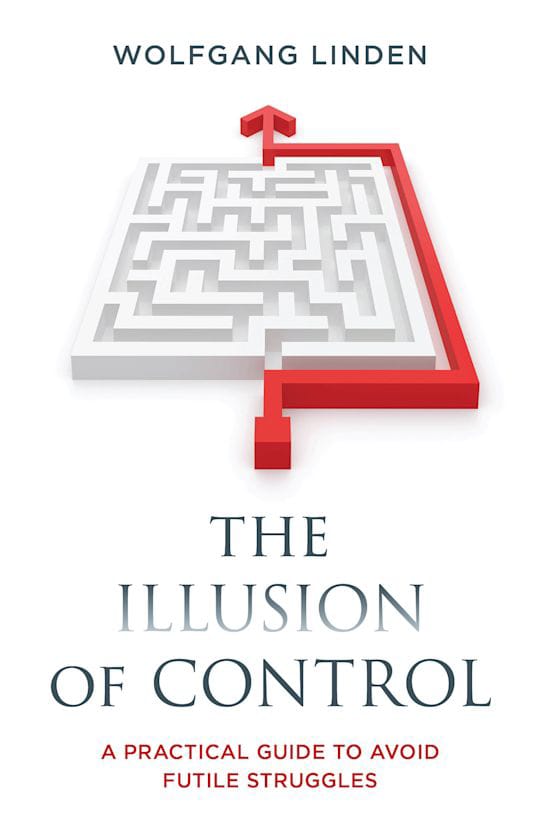
In finance and corporate strategy, control is often perceived as a measure of competence. Boards convene, models are built, forecasts are published, and risk committees deliberate all to assert mastery over outcomes that remain inherently uncertain. Yet reality is more nuanced: the act of seeking control is often as consequential as the results it aims to produce. Control, in markets and organizations alike, is frequently an organized illusion.
Decision-makers operate under conditions of partial information. Market signals are noisy, economic indicators lag, and competitive actions are unpredictable. Every choice, whether it is a capital allocation, a hedging decision, or a strategic pivot carries downstream consequences that cannot be fully anticipated. Yet organizations continue to behave as if these variables are manageable, structuring operations and communications to project certainty where ambiguity prevails.
In financial markets, this dynamic manifests through behavior that appears rational but is rooted in the desire to shape perception. Traders hedge exposures, arbitrage discrepancies, and time transactions not merely for profit but to create the appearance of measured agency over uncertainty. Price movements are interpreted as signals of confidence, but they often reflect collective attempts to assert control, rather than the inherent value of assets. Liquidity and volatility become instruments of narrative, conveying reassurance to counterparties and investors.
Corporations mirror this phenomenon in strategic planning. Scenario analyses, risk assessments, and contingency frameworks serve dual purposes: they prepare firms for plausible outcomes and reinforce internal and external confidence in management’s judgment. Decisions are rarely isolated; they are contingent on how stakeholders, regulators, and competitors are likely to respond. The outward projection of control becomes as important as operational execution. In this context, strategy is performative: the discipline of appearing prepared shapes capital flows, decision timelines, and corporate behavior.

The paradox of control is that its pursuit simultaneously stabilizes and constrains. Efforts to dominate uncertainty impose structure, clarify responsibilities, and reduce visible volatility. Yet this very structure can limit flexibility, slow adaptation, and mask latent risks that emerge when conditions deviate from expectation. Influence is generated not solely by foresight, but by the disciplined exercise of authority over perception and procedure.
Ultimately, mastery in markets and corporate life is provisional. The most consequential outcomes often arise from environments where actors cannot fully dictate results yet act as though they can. The illusion of control is thus strategic: it channels behavior, communicates intent, and shapes markets and firms alike. Recognition of this dynamic allows participants to navigate uncertainty with discipline, balancing ambition with humility, and action with observation. (Start your investment journey today with the cytonn MMF, call+2540709101200 or email sales@cytonn.com)