Sharp Daily
No Result
View All Result
Friday, July 3, 2026
  • Home
  • News
    • Politics
  • Business
    • Banking
  • Investments
  • Technology
  • Startups
  • Real Estate
  • Features
  • Appointments
  • About Us
    • Meet The Team
Sharp Daily
  • Home
  • News
    • Politics
  • Business
    • Banking
  • Investments
  • Technology
  • Startups
  • Real Estate
  • Features
  • Appointments
  • About Us
    • Meet The Team
No Result
View All Result
Sharp Daily
No Result
View All Result
Home Opinion

How Kenyan farmers are adapting to unpredictable weather in 2025

Kanana Joy by Kanana Joy
March 21, 2025
in Opinion
Reading Time: 1 min read

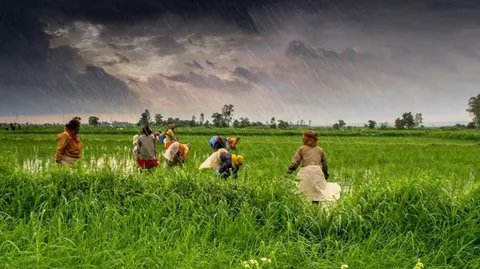
In 2025, Kenyan farmers are grappling with the challenges posed by increasingly unpredictable weather patterns. Climate change has disrupted traditional farming practices, forcing farmers to adopt innovative strategies to sustain their livelihoods and ensure food security.

Recent reports from the Kenya Meteorological Department highlight the erratic nature of rainfall and temperature patterns. For instance, the March-May 2025 long rains season, which is typically reliable, has seen significant variations. Some regions, like the Lake Victoria Basin, experienced above-average rainfall, while others, such as North Eastern Kenya, faced below-average precipitation. Additionally, drier-than-usual conditions have been forecasted for much of the year, with temperatures exceeding 30°C in parts of the Rift Valley and North Eastern Kenya. These shifts have left farmers struggling to predict planting and harvesting seasons.

To adapt to this new reality, many farmers are turning to drought-resistant crops like sorghum, millet, and drought-tolerant maize.

Advanced irrigation systems are also gaining traction. Drip irrigation, which delivers water directly to plant roots cutting water usage, has become a popular method for conserving water and improving yields. Rainwater harvesting is helping farmers store water during wet periods for use during dry spells


RELATEDPOSTS

Kenya opens market to duty free sugar imports after 24 years

January 5, 2026

Kenya’s farmers find hope through climate insurance solutions

January 27, 2025

Farmers are also embracing intercropping and staggered planting. By planting multiple crops together or at different times, they reduce the risk of total crop failure. This is done by dividing land into sections, intercropping for instance maize and beans. While some crops may fail due to erratic rainfall, others often survive, ensuring at least a partial harvest.

Despite these efforts, challenges remain. The cost of adopting new technologies and practices can be prohibitive for small-scale farmers. However, with continued support from government and non-governmental organizations, Kenyan farmers are proving resilient, adapting to the changing climate with ingenuity and determination.


Previous Post

Saving for a big purchase? why CMMF is the best option for 2025

Next Post

Ruto reshuffles government to boost economic transformation

Kanana Joy

Kanana Joy

Related Posts

Analysis

Rising medical Loans highlight Kenya’s health insurance gap

July 2, 2026
Opinion

Why Kenya’s young investors are ditching land for apartments

June 19, 2026
Analysis

Kenya ends self-reporting in gambling sector

June 5, 2026
Analysis

HF group rebrands to HFCB in strategic transformation move

May 28, 2026
Economy

How global supply chains feed Kenya’s fake drug market

May 7, 2026
Analysis

Taifa gas eyes kenyan market with major LPG investment

May 6, 2026

LATEST STORIES

Why the high court’s procurement ruling is a win for fair play in business

July 2, 2026

Kenya’s clean energy shift: why kerosene use is plummeting as LPG consumption soars

July 2, 2026

Kenya Unveils Kshs 1.1 tn Agricultural Investment Strategy to Accelerate Sector Growth by 2030

July 2, 2026

National Infrastructure Fund vs. Sovereign Wealth Fund: Why Kenya Needs Both

July 2, 2026

Kenya’s exports to the US rise as AGOA boost masks growing trade uncertainty

July 2, 2026

Affordable housing in Kenya is not just a housing problem ; It is a housing finance problem

July 2, 2026

Diaspora remittances remain a pillar of Kenya’s economy despite moderation in 2026

July 2, 2026

Kenya misses out on billions as safaricom stake sale nears completion

July 2, 2026
  • About Us
  • Meet The Team
  • Careers
  • Privacy Policy
  • Terms and Conditions
Email us: editor@thesharpdaily.com

Sharp Daily © 2024

No Result
View All Result
  • Home
  • News
    • Politics
  • Business
    • Banking
  • Investments
  • Technology
  • Startups
  • Real Estate
  • Features
  • Appointments
  • About Us
    • Meet The Team

Sharp Daily © 2024