As 2026 approaches, early campaign activity, formal or informal, is beginning to surface across Kenya’s economic landscape. While such periods are often discussed in political terms, their influence on business behavior is largely economic. Extended pre-campaign cycles introduce uncertainty into the market, shaping how firms plan, spend, and invest long before any ballot is cast.
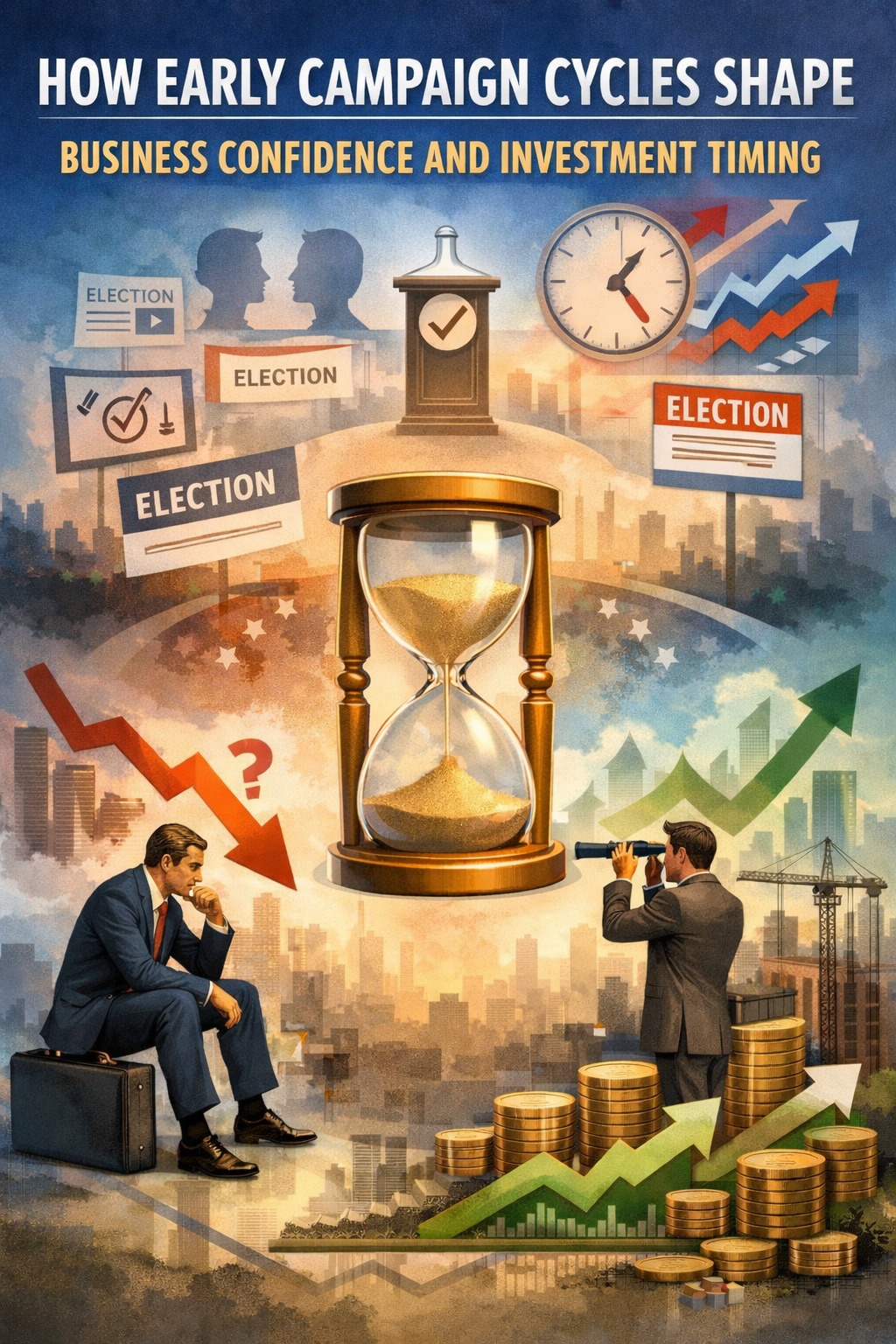
One of the earliest effects is on business confidence. When the policy outlook appears uncertain, firms tend to become cautious. This does not necessarily mean a halt in activity, but rather a shift in priorities. Businesses focus on preserving cash, managing costs, and maintaining operational flexibility. Expansion plans, especially those requiring long-term capital commitments, are often postponed until there is greater clarity about the economic environment.


Investment timing is particularly sensitive during such periods. Large projects, new factories, real estate developments, or significant hiring plans, are more likely to be delayed than cancelled outright. For investors, the option to wait becomes valuable. Capital is held in more liquid instruments, short-term assets, or defensive sectors that can adjust quickly to changing conditions. This behavior can slow fixed investment growth even when underlying demand remains intact.
Consumer behavior also plays a role. Households tend to mirror business caution by prioritizing essential spending over discretionary purchases. This affects sectors such as retail, hospitality, and durable goods, where demand is closely linked to consumer confidence. Businesses operating in these sectors may respond by tightening inventories, offering short-term promotions, or scaling back expansion plans.
At the macro level, extended uncertainty cycles can influence credit markets. Lenders become more risk-aware, tightening underwriting standards or favoring shorter tenors. Borrowers, in turn, may reduce leverage, opting for smaller, incremental investments rather than ambitious growth strategies. The result is a more conservative credit environment, even in the absence of fundamental economic stress.
Importantly, early campaign cycles do not affect all sectors equally. Businesses tied to essential services, fast-moving consumer goods, and export markets often remain resilient, supported by steady demand and diversified revenue sources. In contrast, sectors reliant on long-term planning and large upfront capital, such as construction and infrastructure related services, are more exposed to delays.
Ultimately, the economic impact of early campaign cycles lies less in disruption and more in hesitation. The economy continues to function, but at a more measured pace. For businesses, the challenge is balancing caution with opportunity, maintaining flexibility without losing momentum. Those that plan conservatively, manage liquidity well, and remain responsive to demand shifts are better positioned to navigate extended periods of uncertainty and emerge stronger when confidence eventually returns.
Start your investment journey today with the Cytonn Money Market Fund. Call + 254 (0)709101200 or email sales@cytonn.com