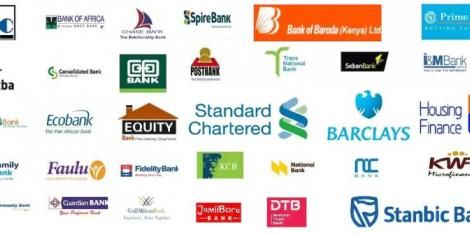
The landscape of Kenya’s banking industry is characterized by a persistent and defining divide: the dominance of the tier 1 banks; KCB Group, Equity Group, Co-operative Bank of Kenya, and Absa Bank Kenya versus the dynamic, but smaller Tier 2 and Tier 3 institutions. This competitive dynamic is not merely about size but speaks to the health of the financial ecosystem serving a diverse population.
The dominance of the tier 1 banks is quantifiable and profound. Collectively, they consistently command a substantial portion of the sector’s key metrics. A report by the Kenya Bankers Association showed Market concentration remained high, with the top 10 banks accounting for 78.2% of total industry asset. The Herfindahl-Hirschman Index (HHI) stood at 810.5 in 2024, indicating a moderately concentrated yet competitive environment. Their scale affords them significant advantages: formidable brand recognition, expansive branch and agency networks, the ability to invest heavily in digital infrastructure, and diversified revenue streams from corporate banking, trade finance, and multinational clients. Their systemic importance means their stability is paramount to national financial health.
In contrast, Tier 2 and Tier 3 banks, numbering over thirty, operate with significantly smaller balance sheets and more focused market strategies. Tier 2 banks, such as NCBA, Stanbic, and Diamond Trust Bank (DTB), often compete directly for upper- and middle-market corporate and retail customers, leveraging specialized services or regional expertise. Tier 3 banks are typically even smaller, community-focused, or niche players. While their individual market shares are modest often in the low single digits they play a critical role in fostering competition and catering to underserved segments. They are often the first to pilot tailored products for specific industries, SMEs, or geographical regions where the giants may be less agile.
Regulatory capital requirements, a key metric of stability, further highlight the divide. Stipulated new core capital requirements for Banks and Mortgage Finance Companies. The Act mandated a phased increase in minimum core capital for banks and mortgage finance companies to Kshs. 10.0 bn to Kshs. 1.0 bn by 2029. While the 14 largest banks which represents 87.0% of sector assets had over Kshs. 10.0 bn core capital in 2024. Smaller banks, while compliant, operate with thinner capital buffers, which can constrain their lending capacity and are expected to explore capital augmentation measures including via mergers and /or acquisitions. With credit bank eyeing Kshs. 4.5 bn fresh capital through a private placement, in the race to comply with the Act while ABC Bank is in kshs 400.0 mn rights issue to meet the capital threshold, Paramount bank rasied Kshs 332.0 mn fresh capital amid takeover links.


In conclusion, the Kenyan banking sector presents a dual reality: a highly concentrated market dominated by a few systemic pillars and a crowded, innovative tier of smaller banks fighting for relevance. This structure is both a source of stability and a potential inhibitor of broader-based growth. The future will likely see continued digital innovation as the primary competitive tool, with strategic partnerships and niche specialization as key survival strategies for Tier 2 and 3 banks. For the economy, this competition is essential to ensure efficiency, innovation, and inclusivity in financial services. For individuals and businesses navigating this varied landscape, choosing a bank is a strategic decision. Regardless of your choice, building your personal financial portfolio is a parallel priority. Start your investment journey today with the Cytonn Money Market Fund. Call +254 (0)709 101 200 or email sales@cytonn.com.