Sharp Daily
No Result
View All Result
Saturday, January 24, 2026
  • Home
  • News
    • Politics
  • Business
    • Banking
  • Investments
  • Technology
  • Startups
  • Real Estate
  • Features
  • Appointments
  • About Us
    • Meet The Team
Sharp Daily
  • Home
  • News
    • Politics
  • Business
    • Banking
  • Investments
  • Technology
  • Startups
  • Real Estate
  • Features
  • Appointments
  • About Us
    • Meet The Team
No Result
View All Result
Sharp Daily
No Result
View All Result
Home News

CBK Issues New Directives On CRB Listing

Editor SharpDaily by Editor SharpDaily
November 11, 2022
in News
Reading Time: 2 mins read
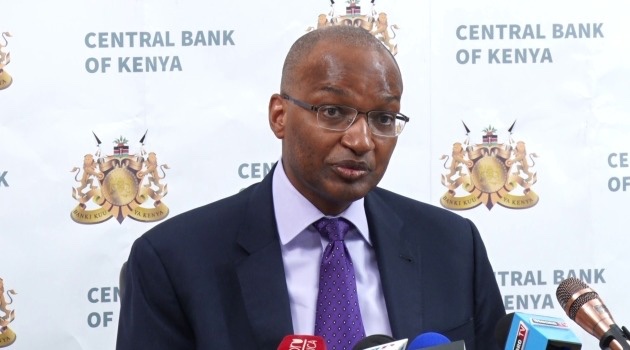
Patrick Njoroge CBK Governor

[Photo/Courtesy]

The Central Bank of Kenya (CBK) has issued new directives on the blacklisting of Kenyans with Credit Reference Bureaus (CRBs) under the Credit Information Sharing (CIS) framework.

In a statement issued on Friday, November 11, 2022, CBK accused CRBs and banks of using the CIS framework to deny customers credit.

“Despite the recent improvements in the Credit Information Sharing (CIS) framework, some concerns persist about its use. This relates largely to the use of adverse credit reports issued by Credit Reference Bureaus (CRBs), which are viewed as being used to deny borrowers credit (“blacklisting”). The Central Bank of Kenya (CBK) remains concerned about this perception and is taking concrete actions to address it and strengthen the CIS framework,” said CBK.

Read: CBK Differs With DP Rigathi Gachagua On Foreign Exchange Reserves

RELATEDPOSTS

Kenyan banks inject sh153 billion into MSMEs

January 16, 2026

NSE ranks second in Africa for dollar returns in 2025

January 12, 2026

In one of the directives, CBK has mandated all CRBs to include a standard statement at the top of every credit report indicating that a customer’s credit score should not be used as the sole reason by a lender to deny a customer a loan.

“Further, CBK is working with CRBs to improve the quality of the credit reports, and in particular, enhance the robustness of their credit scoring models and align them to best practices,” the statement added.

CBK also said that it is working closely with banks in the ongoing implementation of risk-based credit pricing. In this context, banks are required to consider the credit score of a borrower in addition to other factors in making a lending decision. This approach, according to CBK, would allow borrowers and especially micro, small, and medium-sized enterprises (MSMEs) to access appropriately priced credit.

“CBK urges the public to honour their payment obligations on their credit facilities when they fall due. This will enable them to build a good credit history based on their payment behaviour and thereby obtain loans at better rates. When borrowers experience challenges in repaying their loans, they should proactively engage their lenders. They should also review periodically their credit reports to track their credit scores and verify the accuracy of the reports. We remind the public that they are entitled to one free credit report per year,” added CBK.

The CIS framework was launched in Kenya in 2010 and has developed over time with three CRBs licensed by CBK and was refreshed in 2013 and 2020.

Email your news TIPS to editor@thesharpdaily.com
Previous Post

New Safaricom’s Plan to Foster Savings Among Children

Next Post

KRA Official Falls To Death At Times Tower

Editor SharpDaily

Editor SharpDaily

The latest in business, real estate, education, investments, tech and entrepreneurship, brought to you daily. Reach us through thesharpdaily@gmail.com

Related Posts

News

Public enterprises in the capital market

January 23, 2026
News

Why Bank Lending Rates Remain Sticky Despite CBK Policy Signals

January 23, 2026
News

The Rising Foreign Ownership of Kenyan Banks: Opportunity, Risk, or Market Maturity?

January 23, 2026
News

Fuel price decline as a hidden stimulus

January 23, 2026
News

Beyond Representation: Are Kenya’s Foreign Missions Engines of Economic Growth?

January 23, 2026
News

Beyond Compliance: Why Money Laundering Is a Development Problem

January 23, 2026

LATEST STORIES

Why the Two-tiered Structure in NSSF is Important

January 23, 2026

Public enterprises in the capital market

January 23, 2026

Why Bank Lending Rates Remain Sticky Despite CBK Policy Signals

January 23, 2026

The Rising Foreign Ownership of Kenyan Banks: Opportunity, Risk, or Market Maturity?

January 23, 2026

Fuel price decline as a hidden stimulus

January 23, 2026

Beyond Representation: Are Kenya’s Foreign Missions Engines of Economic Growth?

January 23, 2026

Beyond Compliance: Why Money Laundering Is a Development Problem

January 23, 2026

LAPSSET: Delayed Vision or Long-Term Bet on Regional Integration?

January 23, 2026
  • About Us
  • Meet The Team
  • Careers
  • Privacy Policy
  • Terms and Conditions
Email us: editor@thesharpdaily.com

Sharp Daily © 2024

No Result
View All Result
  • Home
  • News
    • Politics
  • Business
    • Banking
  • Investments
  • Technology
  • Startups
  • Real Estate
  • Features
  • Appointments
  • About Us
    • Meet The Team

Sharp Daily © 2024