


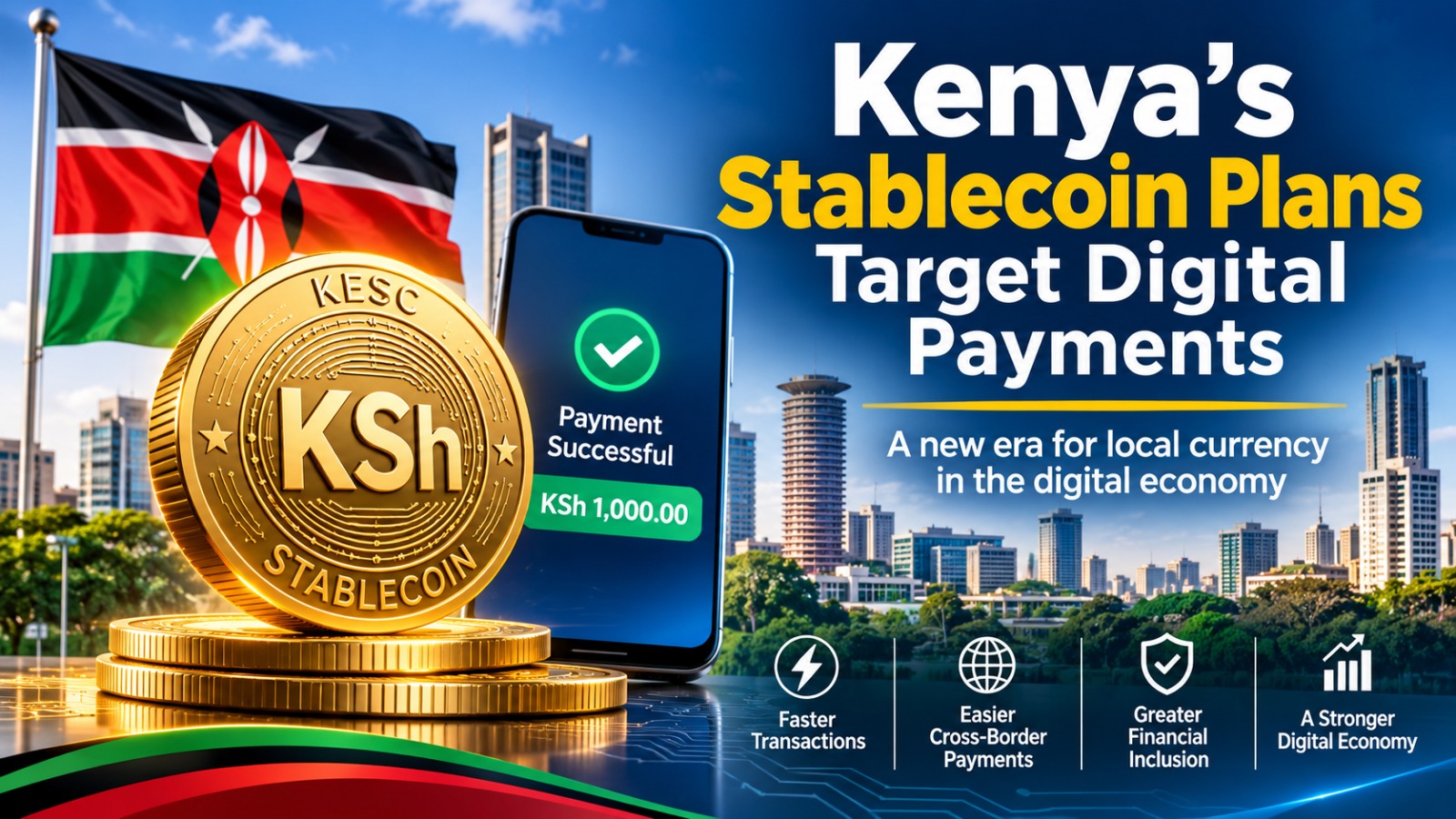
Kenyan stablecoin plans are gaining momentum following the announcement by digital asset infrastructure firm Supercoin that it has submitted a licensing application to introduce a Kenyan shilling-backed digital currency. The proposed initiative, announced during the Africa Stablecoin Summit held in Cape Town, South Africa, on November 12–13, 2026, reflects growing interest in extending blockchain-based payment infrastructure beyond US dollar-denominated digital currencies. If approved, the initiative could introduce an alternative mechanism for businesses to transfer and settle payments in Kenyan shillings, potentially improving the efficiency of domestic and regional financial transactions.
Supercoin Managing Director Gideon Greaves disclosed the application on November 19, 2026, explaining that African currencies should benefit from the same accessibility and transaction efficiency that dollar-backed stablecoins have established across global digital asset markets. The proposed development forms part of a broader strategy to expand local-currency digital financial infrastructure across African markets, where businesses continue to encounter challenges associated with cross-border payment costs, settlement delays and foreign exchange conversion.
Supercoin Explores a Kenyan Shilling-Backed Stablecoin
The proposed digital currency, identified as KESsc in industry reporting, is expected to maintain a one-to-one relationship with the Kenyan shilling, with each token representing Kshs 1.00. According to Business Tech Africa, the proposed arrangement would involve holding corresponding Kenyan shilling reserves in a domestic bank, providing the underlying financial backing for the digital tokens.
The initiative builds on Supercoin’s existing operations in South Africa, where the company has introduced ZARsc, a rand-backed stablecoin. The company has also launched Supercoin Mint, an enterprise platform that enables businesses to issue and redeem ZARsc against rand deposits. Its proposed Kenyan expansion would therefore extend an existing local-currency digital asset model into another African market, rather than introduce an entirely new payment concept.


According to industry reporting, Supercoin is targeting 2027 for the introduction of KESsc, subject to approval from the relevant Kenyan authorities. However, the company has not yet received confirmation of regulatory approval for the proposed Kenyan product. The eventual launch will depend on licensing, reserve arrangements and the development of supporting financial infrastructure.
Local-Currency Stablecoins Could Transform Cross-Border Payments
One of the potential advantages of a shilling-backed stablecoin is its ability to facilitate transactions without requiring users to first convert their funds into US dollar-denominated digital currencies. Currently, USDT and USDC account for a substantial proportion of stablecoin activity globally, providing access to dollar-denominated value through blockchain-based payment networks.
However, using dollar-backed stablecoins for transactions between African markets can introduce additional foreign exchange conversion requirements. For instance, a Kenyan business making payments to a South African supplier may need to convert Kenyan shillings into dollars before settling the transaction in rand. A local-currency stablecoin ecosystem could potentially simplify this process by supporting direct settlement between participating currencies, subject to the availability of liquidity and compatible payment infrastructure.
The opportunity extends beyond international trade to include supplier payments, business settlements and the movement of funds between financial institutions. Blockchain networks can facilitate transactions outside conventional banking operating hours, potentially improving settlement availability during weekends and public holidays.
Nevertheless, the technology alone does not guarantee lower transaction costs or faster end-to-end payments. At the Africa Stablecoin Summit, PawaPay Chief Executive Officer Nikolai Barnwell emphasised that blockchain settlement must be connected to existing payment systems. Businesses still require reliable channels for depositing and withdrawing funds, managing liquidity and accessing local financial services. PawaPay reportedly connects to more than 50 mobile money operators across 23 African markets, highlighting the importance of interoperability between digital asset infrastructure and established payment networks.
Kenya’s Regulatory Framework and Stablecoin Oversight
The proposed introduction of a local-currency stablecoin comes as Kenya strengthens its regulatory framework for virtual assets. The Virtual Asset Service Providers Act, 2025, and its implementing regulations establish the licensing and supervisory responsibilities of the Central Bank of Kenya (CBK) and the Capital Markets Authority (CMA) over relevant virtual asset service providers.
The Virtual Asset Service Providers Regulations, 2026, were gazetted on July 22, 2026, under Legal Notice No. 134, bringing the regulatory framework into operation. The regulations provide specific requirements for stablecoin issuance, including a minimum paid-up capital requirement of Kshs 300.0 million for stablecoin issuers, alongside requirements relating to reserve assets, custody, redemption and financial risk management.
These requirements are particularly important because the credibility of a stablecoin depends on the ability of its issuer to maintain adequate reserves and honour redemption requests. Users and businesses must have confidence that digital tokens can be converted back into the underlying currency at the promised value. Consequently, regulatory oversight, independent verification of reserves and transparent redemption arrangements will be central to the commercial viability of the proposed KESsc.
For Supercoin, obtaining regulatory approval will therefore represent an important milestone before commercial operations can begin. The framework also creates a formal environment within which other financial technology companies and payment providers can explore regulated blockchain-based payment solutions.
Operational Challenges Could Determine Commercial Success
Despite the potential benefits, introducing a shilling-backed stablecoin presents several operational and financial considerations. One of the most important is liquidity management. An issuer must maintain sufficient underlying reserves to support the value of tokens in circulation while ensuring that users can redeem their digital balances without unnecessary delays.
Additionally, the integration of stablecoins with existing payment infrastructure will determine whether businesses can use them for practical financial transactions. In Kenya, mobile money platforms and banking institutions remain important channels through which individuals and businesses receive, transfer and withdraw funds. Connecting blockchain settlement networks to these established systems will be essential in making a shilling-backed digital currency commercially useful.
There are also considerations around transaction costs, cybersecurity, anti-money laundering compliance and consumer protection. While blockchain technology can improve the speed of transferring digital value, businesses must still account for network fees, conversion charges and the costs of maintaining liquidity across different payment channels.
Furthermore, the proposed stablecoin will need to demonstrate a clear commercial advantage over existing payment alternatives. Its adoption will ultimately depend on whether businesses can use it to make payments more efficiently, reduce settlement costs and access reliable conversion into conventional Kenyan shillings.
Outlook for Kenya’s Digital Payments Market
The proposed introduction of a Kenyan shilling-backed stablecoin represents an emerging development in the country’s digital payments landscape. While dollar-backed stablecoins have demonstrated the potential of blockchain-based financial transactions, local-currency alternatives could expand the application of this technology to domestic payments and regional trade.
Going forward, the success of KESsc will depend on regulatory approval, the credibility of its reserve arrangements and its integration with existing financial institutions and payment networks. Greater participation by banks, payment service providers and fintech companies could also support the development of an interoperable digital financial ecosystem.
For Kenya’s financial services industry, the development presents an opportunity to explore how blockchain-based settlement can complement conventional banking and mobile money infrastructure. Although the proposed product remains subject to regulatory approval, it highlights a broader shift in Africa’s digital payments market towards locally relevant financial infrastructure capable of supporting faster, more accessible and efficient transactions.