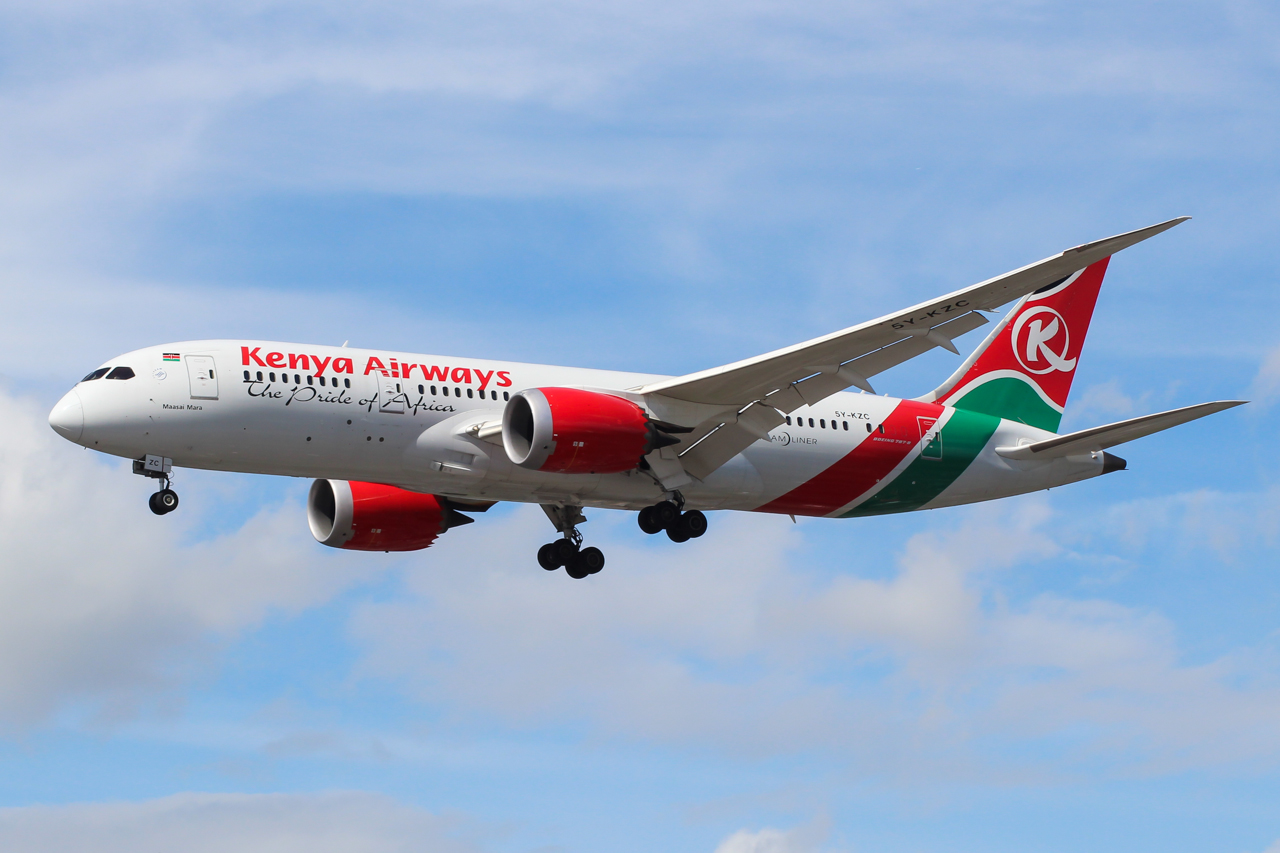
The Government of Kenya has announced plans to offer Kenya Airways (KQ) to foreign investors as part of an ambitious bid to revive the struggling national carrier and reduce its reliance on state support. The move, announced in February 2026, aims to attract between Sh154.8 billion and Sh258 billion ($1.2 billion to $2 billion) in new capital to underpin a comprehensive turnaround strategy that could reshape the airline’s future.
Treasury Cabinet Secretary John Mbadi said the government will issue an international expression of interest (EOI) to identify a strategic investor who can provide not only fresh capital but also expertise and operational discipline. “The new investor is expected to inject a minimum of 1.2 billion US dollars and up to 2 billion US dollars into the business,” Mbadi said, highlighting the scale and urgency of the recapitalization effort.
The decision follows years of efforts by Kenya Airways to stabilise its finances and improve operational performance. In March 2025, the airline reported its first full year profit in over a decade, with a net gain of Sh5.4 billion after persistent losses, driven by capacity expansions and a recovery in passenger demand. However, analysts note that the long road to sustained profitability still requires substantial investment, especially to modernize the fleet and expand network reach.
Despite the return to profitability, Kenya Airways continues to face structural challenges, including high operating costs and the need to rationalize routes and staffing to remain competitive in the increasingly crowded African aviation market. The government already assumed Sh63.1 billion of the airline’s debt, and shifting the airline to a more private sector led ownership structure is seen as a way to relieve pressure on the national budget.
Industry observers say the planned investment drive could bring fresh confidence to the airline if it leads to well negotiated strategic partnerships. A foreign investor with deep experience in aviation could help streamline operations, enhance revenue management and tap into new markets. Critics, however, argue that securing an investor willing to commit the top end of the Sh258 billion range will depend on demonstrating a credible business and governance turnaround plan.

Some speculation had previously arisen around specific suitors, but Singapore based firm Temasek publicly denied involvement in talks, clarifying it is not pursuing a stake in Kenya Airways. This underscores the competitive nature of the search and the caution exercised by potential investors weighing long term returns against industry risks.
The planned investor search is also expected to coincide with internal restructuring efforts, including renegotiation of collective bargaining agreements and alignment of the airline’s network and fleet strategy with global best practices. Mbadi described these structural reforms as core to positioning Kenya Airways as a “competitive African carrier capable of running sustainably.”
For many Kenyans the prospect of foreign participation in the airline carries both promise and concern. Supporters argue that strategic capital and expertise are essential to ensure the airline’s survival and long term growth, while others caution that foreign involvement must preserve national interests and maintain strong Kenyan participation in a flagship national enterprise.
As the EOI process unfolds and potential investors come forward, the success of this initiative could determine whether Kenya Airways emerges as a revitalized global competitor or continues to struggle under legacy costs and industry headwinds.