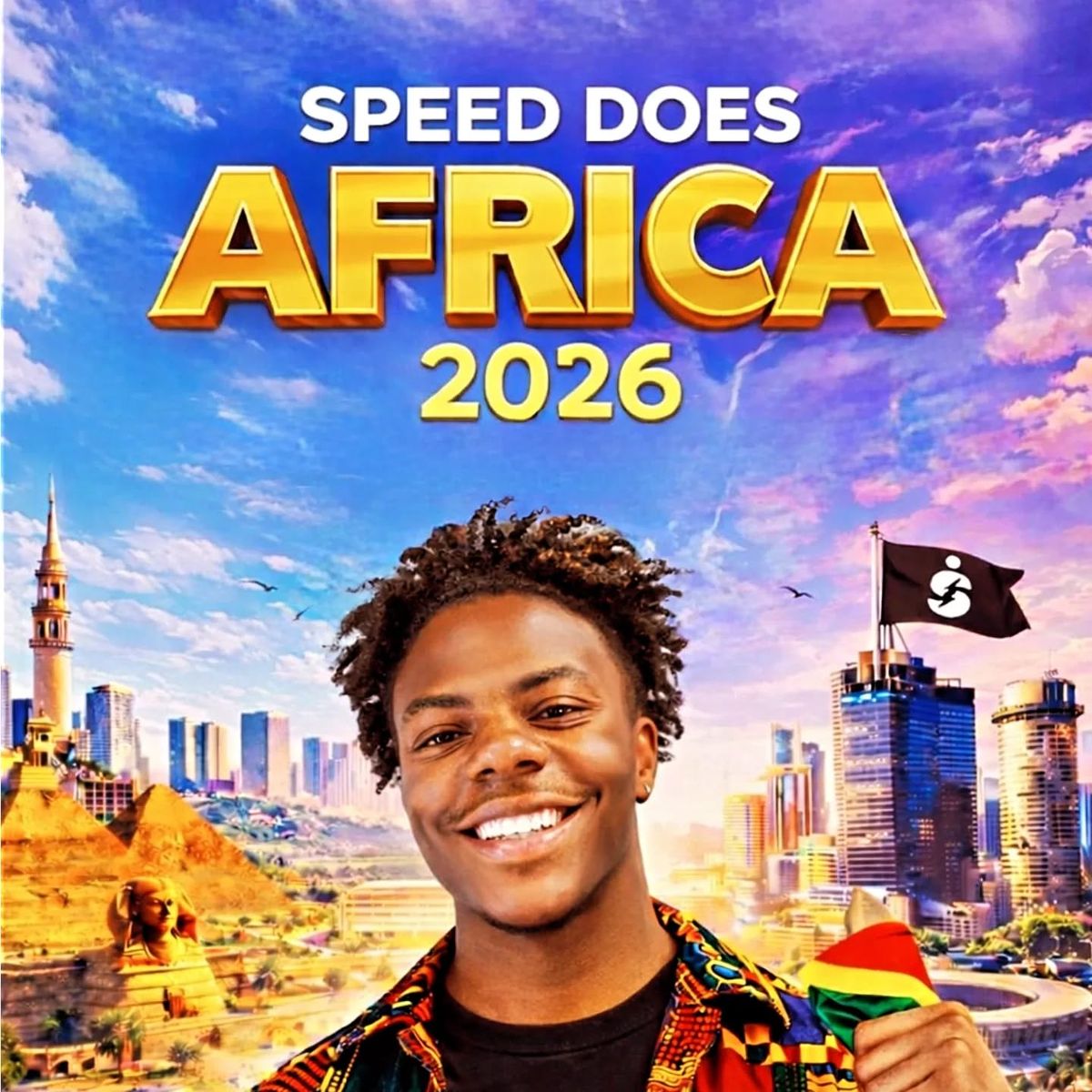
One week ago, American streamer IShowSpeed wrapped up his ambitious 28-day journey across the African continent, concluding his adventure with an exploration of Namibia. What started as a content creator’s tour became something far more significant: a cultural moment that sparked conversations about identity, perception, and Africa’s place in the global imagination.
The Perception Problem
A bigger issue, and particularly the biggest piece of the puzzle, is perception. How we are perceived and what it means for our identity as Africans.
Huge debates arise from Western media propaganda’s explicit depiction of how primitive and undeveloped “most if not all” of Africa allegedly is. But as critics have noted, this tour wasn’t about saving anyone; it was about showing reality.
Why is the IShowSpeed Africa tour important? A pertinent question most people are asking. Are you aware of how the Western world perceives Africa through media propaganda, not forgetting extremists? Millions of people in Western countries believe Africa is plagued by incessant wars, disasters, hunger, and lacks cities, with inhabitants living in trees and interacting with wild animals.


This narrative has brainwashed a generation of African Americans, especially, deterring them from connecting with their ancestral heritage and condemning them to a disconnected existence from their roots. However, social media, through influencers like Speed, has shed a more positive light on Africa, encouraging tourism and investment.
The Speed Effect: More Than Just Content
But this is not all of it, is it?
See, IShowSpeed is an embodiment of the struggles many men and even women face. The struggle of stability, starting, and consistency. It’s a wake-up call to us with aspirations to seek a course and give it all we have. To grind and always show up like it’s all that we depend on.
Reports from across the continent captured the energy Speed brought to every location. Many Kenyans were particularly active online, with special notice given to Speed not taking off the Kenyan bracelet throughout his entire tour, a small gesture that spoke volumes about authentic connection.
The Winners and the Lessons
Ghana and other countries did well to accomplish this mission of showcasing their positive attributes. Ethiopia, in particular, has shocked the Western world with what Speed’s cameras revealed: modern cities, rich culture, and opportunities that counter decades of stereotypical narratives.
The BBC’s coverage of the tour highlighted how traditional media is now being forced to reckon with the narratives that social media influencers are creating, narratives that don’t fit neatly into the “poverty porn” framework that has dominated African coverage for generations.
What This Means for Africa’s Future
The 28-day tour ended last week, but its impact is just beginning to unfold. Speed didn’t come to Africa with an agenda to “save” anyone or perpetuate the white savior complex that has plagued Western engagement with the continent. He came, he saw, he streamed, and millions of people around the world saw Africa through unfiltered eyes.
This is the power of modern media. This is what happens when perception shifts from curated documentaries and NGO fundraising campaigns to real-time, authentic engagement. The tour proved that Africans don’t need saving; we need visibility, and we need our stories told by people willing to see us as we are, not as Western narratives have painted us to be.
For the younger generation watching, both in Africa and the diaspora, Speed’s tour represents something else entirely. It’s proof that consistency pays off. That showing up every single day, grinding regardless of the obstacles, and staying true to your mission can create impact beyond measure.
The Call to Action
The tour is over. The cameras have moved on. But the work continues.
We cannot rely on visiting influencers to tell our stories. We must create our own narratives, build our own platforms, and showcase our own excellence. Speed opened a window; it’s up to us to keep it open and show the world what’s always been here: innovation, culture, opportunity, and resilience.
The Western world’s perception of Africa has been shaped by decades of propaganda and selective storytelling. One 28-day tour won’t undo all of that. But it’s a start. And if there’s one thing Speed’s journey proved, it’s that the world is ready to see Africa differently if we’re bold enough to show them who we really are.
What are your thoughts on IShowSpeed’s Africa tour? Did it change perceptions, or do we still have a long way to go in reshaping how the world sees the continent? Share your perspective in the comments below.