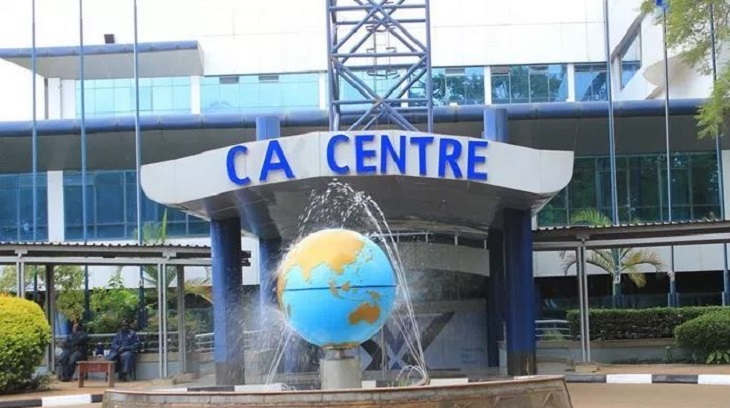
Kenya’s telecommunications sector is set for tighter regulation after the Communications Authority of Kenya announced plans to raise the minimum service quality threshold from 80 percent to 90 percent. The proposed changes were outlined in a draft regulatory framework released in November 2025 as part of efforts to improve mobile network performance across all 47 counties.
Under the new rules, telecom operators such as Safaricom, Airtel Kenya and Telkom Kenya will be required to meet the higher compliance score or face stronger penalties and closer county level scrutiny. The regulator said the move is intended to ensure that service quality improves not only at the national level but also in individual regions where customers have raised concerns.
The proposed threshold will require operators to achieve an aggregate score of 90 percent or above per county, the Communications Authority said in its draft framework dated November 18, 2025. Failure to meet this standard will attract regulatory sanctions in line with existing enforcement provisions.
Currently, operators are considered compliant if they meet at least 80 percent of the set Key Performance Indicators, which include call completion rates, dropped call ratios, data speeds and network availability. However, recent quality reports show that many counties continue to experience sub optimal service, especially in rural and remote areas.
In a service quality assessment covering the period to June 2024, only about a third of Kenya’s counties met the existing 80 percent benchmark. Urban centres such as Nairobi and Mombasa generally recorded stronger network performance, while several rural counties lagged behind.


The Communications Authority said the county based approach would give a more accurate picture of how operators are performing on the ground. National averages can mask poor service in specific locations, the regulator noted. Our focus is to ensure equitable quality of service for all consumers, regardless of where they live.
Telecom firms have acknowledged the need for continuous improvement but have also pointed to the operational challenges of expanding and maintaining network infrastructure across the country. A senior executive at one mobile operator said in December 2025 that network upgrades require significant investment, especially in underserved areas where terrain and power access remain major challenges.
The regulator has also signaled that penalties for non compliance will be strengthened. Under existing rules, telecom operators can be fined a percentage of their revenues for persistent quality failures. In recent years, several firms have been penalised for network outages and service disruptions.
Consumer advocacy groups have welcomed the proposed changes, arguing that reliable mobile and internet services are now essential for economic activity, education, healthcare and digital government services. Telecom quality is no longer a luxury issue, said a Nairobi based consumer rights advocate in January 2026. It directly affects how people work, learn, and access essential services.
The Communications Authority is currently collecting public feedback on the proposed framework, with final regulations expected later in 2026. Once implemented, the new 90 percent threshold will set a higher bar for Kenya’s telecom operators and could lead to increased investment in network upgrades, customer experience improvements, and service monitoring systems.
As digital dependence continues to grow, the regulator says the updated quality standards are aimed at ensuring that Kenya’s telecom infrastructure keeps pace with the country’s social and economic needs.