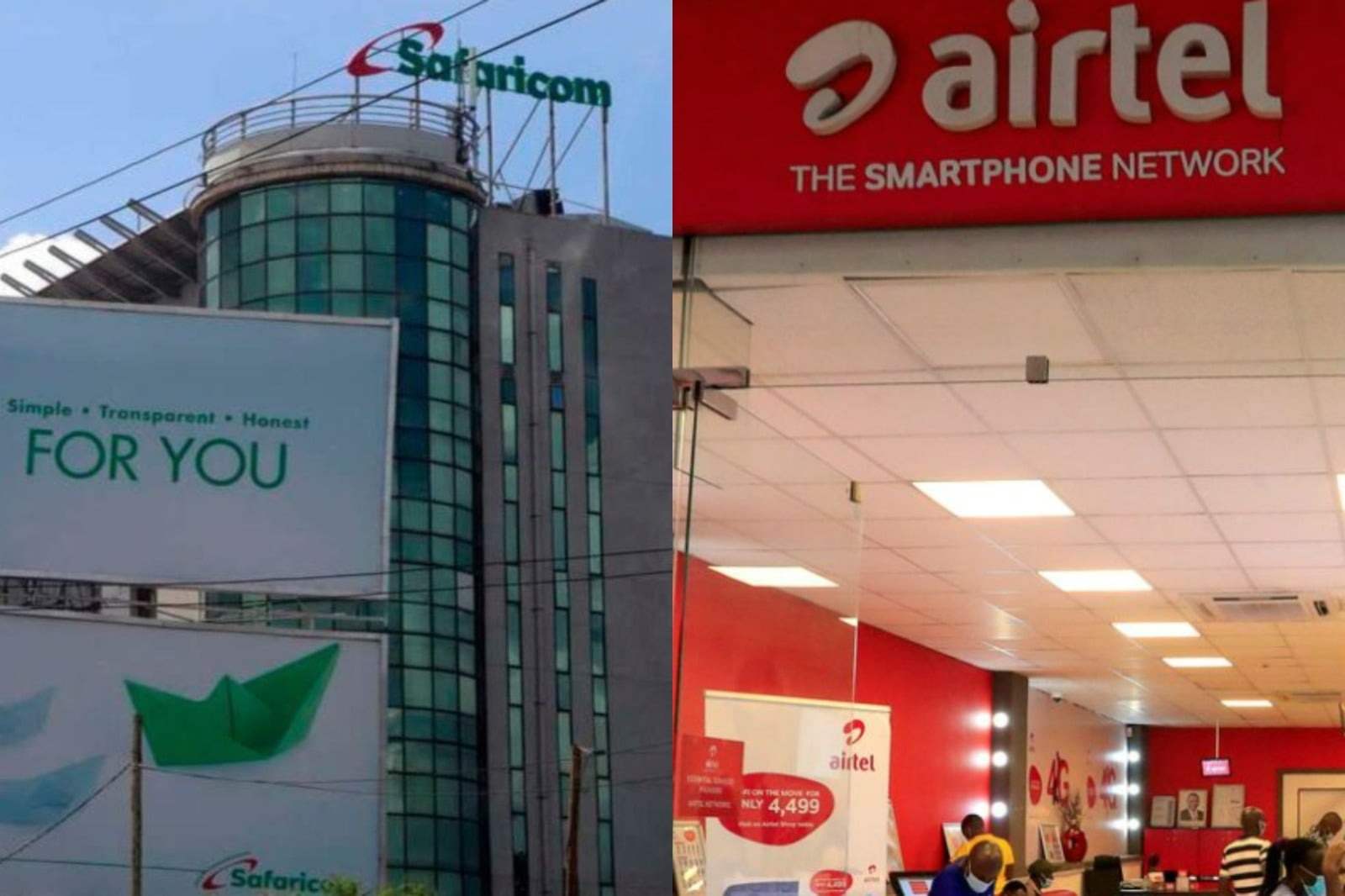
Airtel Kenya is preparing to launch a digital overdraft service on Airtel Money, setting up a direct challenge to Safaricom’s Fuliza, which currently dominates the short-term mobile credit market.
The planned product will allow Airtel Money users to complete transactions even when they lack sufficient funds, provided they remain within an approved limit. Airtel says it is in the final stages of regulatory and stakeholder approvals and expects to roll out the service early this year.
“We are currently in advanced stages with various stakeholders in regard to approvals,” an Airtel spokesperson said in an email response. The company has also hinted that its overdraft facility could come with lower charges than those currently prevailing in the market.
How Mobile Overdrafts Work
Digital overdrafts allow mobile money users to transact beyond their wallet balance. The shortfall is treated as a loan and is automatically recovered when funds hit the account.


Safaricom introduced Fuliza in 2019 as an optional service on M-Pesa. It covers person-to-person transfers, bill payments, merchant payments, withdrawals, and purchases of airtime and data. Once money enters a customer’s wallet, the system automatically repays the loan plus fees.
Safaricom charges a one-off one percent access fee and a daily maintenance charge. Fees range from Sh5 for small amounts to Sh30 for loans above Sh2,500, depending on the borrowed amount.
Airtel Targets Lower Charges and Inclusion
Airtel has positioned its planned overdraft as part of a broader push for affordability and financial inclusion. Airtel Money Managing Director Anne Kinuthia-Otieno has publicly criticized what she describes as high charges in Kenya’s mobile money ecosystem.
“They need to be brought down to create affordability because what we are offering to Kenyans is financial inclusion,” she said recently in an interview with KBC.
Safaricom currently runs Fuliza in partnership with NCBA Bank Kenya and KCB Bank Kenya, which underwrite the loans. Airtel declined to disclose which lenders it is working with for its product.
Fuliza’s Scale Shows Market Opportunity
Safaricom’s Fuliza has grown rapidly alongside rising mobile money usage. Active Fuliza users increased by 22.2 percent to 9.1 million in the six months to September 2025. Kenyans borrowed Sh629.2 billion through the service during the period, up 39.8 percent from the previous year.
The average Fuliza loan size rose to Sh254.60 from Sh236.20. The product has become a major revenue driver, helping M-Pesa revenue grow 14 percent to Sh88.1 billion in the half year. That figure accounts for nearly half of Safaricom’s total revenue.
Despite its growth, Fuliza still reaches a minority of Safaricom customers. Active Fuliza users represent about 17.8 percent of the telco’s 51.12 million active subscribers.
Airtel Looks to Expand Airtel Money Ecosystem
Industry data shows Kenya had 48.6 million mobile money subscriptions as of September 2025, translating to a penetration rate of 92.8 percent. Safaricom controlled 89.7 percent of the market, while Airtel Money held 10.3 percent. Telkom’s T-Kash remained marginal.
Safaricom has also leaned on M-Shwari, its M-Pesa-linked savings and lending platform, to deepen customer engagement. Monthly active users on M-Shwari rose 17.6 percent to 7.9 million by September 2025.
Airtel has not ruled out adding similar savings or credit features as it expands Airtel Money. “We are always innovating to meet the needs of our customers,” the company said, signalling that more financial products could follow the overdraft launch.