
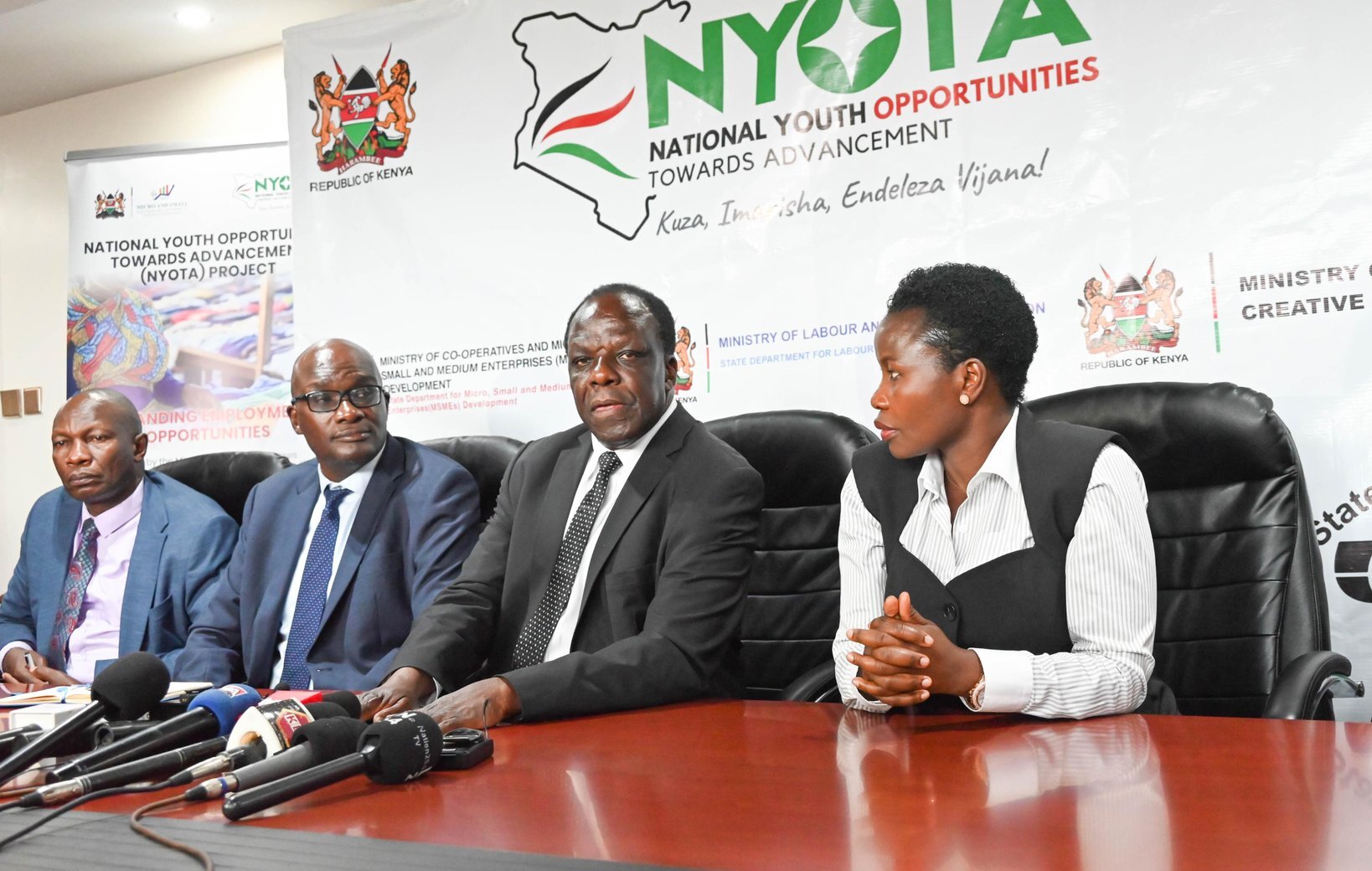
President William Ruto has strongly defended the NYOTA Youth Fund following criticism over its structure and rollout, insisting the initiative is a critical intervention to tackle youth unemployment and expand access to capital for young entrepreneurs across Kenya.The NYOTA Fund, which offers Sh50,000 grants to eligible youth groups and individuals, is designed to support small businesses, startups, and income-generating activities. Speaking during engagements in the Mt Kenya region, President Ruto dismissed claims that the programme is politically motivated, emphasizing that it is anchored in economic empowerment rather than handouts.
According to the government, the fund targets young Kenyans who have been locked out of formal credit markets due to lack of collateral, credit history, or stable income. By offering grants instead of loans, the administration says the programme reduces the financial burden on youth while encouraging innovation, self-employment, and grassroots enterprise development.Ruto argued that empowering young people financially is essential to sustaining long-term economic growth. He noted that micro and small enterprises remain the backbone of Kenya’s economy, accounting for a significant share of employment. Supporting youth-led businesses, he said, aligns with the broader Bottom-Up Economic Transformation Agenda (BETA), which prioritizes small traders, farmers, and informal sector workers.
However, the NYOTA Youth Fund has sparked debate among policymakers, economists, and civil society groups. Critics have raised concerns over transparency, selection criteria, and sustainability, warning that poorly monitored grants could be misused or fail to achieve lasting impact. Others argue that without complementary training, mentorship, and market access, cash grants alone may not translate into viable businesses.In response, government officials have stated that the fund is integrated with capacity-building initiatives, including financial literacy training and business development support. The administration has also pledged to use digital platforms and local oversight committees to enhance accountability and ensure funds reach intended beneficiaries.
Youth leaders and entrepreneurs have offered mixed reactions. Some welcome the initiative as a timely boost amid high unemployment and rising living costs, while others call for clearer guidelines and stronger private-sector partnerships to improve outcomes. Many agree that access to affordable capital remains one of the biggest barriers facing young entrepreneurs.As implementation continues, the success of the NYOTA Youth Fund is likely to be judged by its ability to create sustainable businesses, generate jobs, and demonstrate transparent use of public resources. For the government, the programme represents both an economic intervention and a test of its commitment to youth-driven development in the run-up to future elections.