In everyday conversation, the terms “income” and “wealth” are often used interchangeably to describe financial success. However, they represent fundamentally different economic concepts and confusing them can lead to a profound misunderstanding of inequality, opportunity and financial security in society.
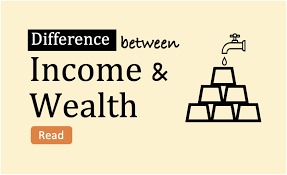
Income is the flow of money received over a specific period, typically a year. It is the stream of earnings from salaries, wages, business profits or investments. As economist definitions note, it is what you report on your annual tax return. Wealth, in contrast, is the stock of valuable assets owned at a point in time. It is the net worth accumulated over a lifetime or generations, calculated as the total value of homes, investments, savings and other assets minus all debts. A high-income professional might earn a substantial salary but have significant student loans and a large mortgage, resulting in modest wealth. Conversely, a retired individual may have a modest pension income but own a debt-free home and a substantial investment portfolio, placing them in a position of significant wealth.
This distinction matters profoundly for several reasons. First, wealth is the primary source of long-term security and resilience. It functions as a personal safety net, allowing families to weather job loss, medical emergencies or economic downturns without a catastrophic drop in living standards, a point underscored by analyses of financial stability. Wealth also generates more wealth through returns on investment such as capital gains, dividends and rental income, creating a cycle of advantage that income alone cannot easily replicate.
Second, wealth, more than income, is perpetuated across generations through inheritances, gifts for education and down payments on first homes. This intergenerational transfer is a key driver of persistent economic disparity. While income inequality is visible in pay checks, wealth inequality is often hidden in balance sheets but far more extreme, with significant consequences for life chances.


Furthermore, public policy often fails to distinguish adequately between the two. Tax systems, for instance, frequently levy higher rates on income from work than on income from wealth (like capital gains), potentially favoring those who already hold assets. Policies aimed at supporting low-income families are crucial for immediate needs but do little to address the vast wealth gap that dictates long-term opportunity.
Ultimately, focusing solely on income paints an incomplete picture of economic health. A society with rising incomes but stagnant or concentrated wealth is one where prosperity is shallow and financial vulnerability is widespread. Understanding that wealth represents stored economic power and security forces a deeper conversation about how assets are built, protected and distributed a conversation essential for fostering genuine and lasting economic well-being for all. ( start your investment journey today with the cytonn money market fund. Call + 254 (0)709101200 or email sales@cytonn.com)