Sharp Daily
No Result
View All Result
Friday, January 23, 2026
  • Home
  • News
    • Politics
  • Business
    • Banking
  • Investments
  • Technology
  • Startups
  • Real Estate
  • Features
  • Appointments
  • About Us
    • Meet The Team
Sharp Daily
  • Home
  • News
    • Politics
  • Business
    • Banking
  • Investments
  • Technology
  • Startups
  • Real Estate
  • Features
  • Appointments
  • About Us
    • Meet The Team
No Result
View All Result
Sharp Daily
No Result
View All Result
Home Investments

Implications of government default on pensions contributions

Joshua Otieno by Joshua Otieno
June 21, 2024
in Investments
Reading Time: 2 mins read

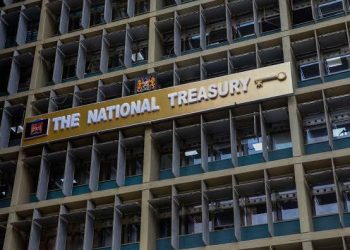
Recent reports about failure by the government to remit KES 219. 9 million in its share of contributions to the Public Service Superannuation Fund (PSSF) in the financial year ending June 2023 is quite unfortunate. Pension plans for civil servants are not just perks; they are foundational to the economic security of retirees and the stability of the broader economy. When governments fail to fulfill their pension obligations, the consequences reverberate far beyond individual financial distress, affecting the entire economic fabric of a nation.

Civil servants, who dedicate their careers to public service, often rely heavily on their pensions for a secure retirement. These pensions are a crucial part of their compensation, ensuring they can retire with dignity and financial stability. Defaulting on pension contributions threatens this stability, reducing retirees’ disposable income. This reduction leads to decreased consumer spending, as retirees cut back on essential and discretionary purchases. Given that consumer spending drives economic growth, this decline can lead to reduced business revenues, job losses, and a broader economic slowdown.

The impact extends to financial markets, where pension funds are significant players. When governments default on contributions, it disrupts the financial ecosystem, causing market instability and shaking investor confidence. This uncertainty can lead to increased borrowing costs for governments, as lenders demand higher interest rates to offset the perceived risk. A government’s failure to meet its pension obligations can also result in credit rating downgrades, making future borrowing more expensive and straining public finances further.

Business confidence can also erode as companies grow wary of investing in an economy where the government fails to honor its financial commitments. This hesitancy can stifle economic growth and job creation, leading to a less dynamic and resilient economy. Moreover, foreign investors may shy away, fearing fiscal instability, thereby limiting the country’s access to crucial external capital and expertise.


RELATEDPOSTS

Segregated Pension Schemes in Kenya Q2’2025 Performance

August 8, 2025

How umbrella pension schemes work in Kenya

April 11, 2025

The broader consequence is a rise in wealth inequality, as those without alternative retirement savings suffer the most. This growing disparity can lead to social and economic tensions, undermining the cohesive fabric of society. it is imperative for governments to honor their pension commitments to civil servants. Doing so not only safeguards the financial stability of retirees but also upholds public trust and fosters a stable, thriving economy. Ensuring fiscal responsibility in pension contributions is not just a matter of policy—it’s an economic necessity.


Previous Post

Financing options available in Kenya’s real estate market

Next Post

Tax hikes spark protests as Kenya seeks to cut deficit

Joshua Otieno

Joshua Otieno

Related Posts

Analysis

NSE bond trades hit record Sh2.7 trillion on investor surge

January 23, 2026
Investments

Strategic ownership shifts are reshaping the NSE Equity landscape

January 22, 2026
The up arrow shows the inflation rate. Interest rates increase, home loan, mortgage, house tax. investment and asset management concept. percentage for increasing interest rates with stacks coins
Investments

Understanding Private Equity (P.E) in Kenya

January 21, 2026
Analysis

Kenyan investors allocated 60 percent of KPC shares in landmark IPO

January 20, 2026
Analysis

Kenyan investors can buy up to 60% of 11.8 billion KPC shares at Sh9 each

January 20, 2026
Investments

Mobile Money Meets the Stock Market

January 16, 2026

LATEST STORIES

Why the Two-tiered Structure in NSSF is Important

January 23, 2026

Public enterprises in the capital market

January 23, 2026

Why Bank Lending Rates Remain Sticky Despite CBK Policy Signals

January 23, 2026

The Rising Foreign Ownership of Kenyan Banks: Opportunity, Risk, or Market Maturity?

January 23, 2026

Fuel price decline as a hidden stimulus

January 23, 2026

Beyond Representation: Are Kenya’s Foreign Missions Engines of Economic Growth?

January 23, 2026

Beyond Compliance: Why Money Laundering Is a Development Problem

January 23, 2026

LAPSSET: Delayed Vision or Long-Term Bet on Regional Integration?

January 23, 2026
  • About Us
  • Meet The Team
  • Careers
  • Privacy Policy
  • Terms and Conditions
Email us: editor@thesharpdaily.com

Sharp Daily © 2024

No Result
View All Result
  • Home
  • News
    • Politics
  • Business
    • Banking
  • Investments
  • Technology
  • Startups
  • Real Estate
  • Features
  • Appointments
  • About Us
    • Meet The Team

Sharp Daily © 2024